
FPSC SST (BS-17) and SET (BS-16) (Physical) Test Preparation
FPSC Secondary School Teacher (BS-17) Test Preparation Course at Mahida Academy is a comprehensive, exam-focused program designed according to the prescribed official FPSC syllabus. The course covers the complete paper pattern, including English language proficiency, specialized subject knowledge, and core pedagogical domains such as teaching methodology, assessment & evaluation, classroom management, and Bloom’s taxonomy. With structured lessons, targeted practice, and high-yield conceptual coverage, this program prepares candidates to excel in the written examination and secure a Secondary School Teacher position under Federal Public Service Commission.
Curriculum
- 13 Sections
- 83 Lessons
- 150 Days
- Syllabus-FPSC SST (BS-17) and SET (BS-16)1
- Diagnostic Tests6
- EnglishThis section covers English (20 Marks)11
- 3.11.0 Baseline Evaluation: Diagnostic Test (Copy)
- 3.22.1 Structural Mechanics and Grammar: Grammar Usage in Official Contexts (Copy)
- 3.32.2 Sentence Structuring (Copy)
- 3.42.3 Sentence Correction (Copy)
- 3.53.1 Lexical Precision: High-Frequency Vocabulary Application (Copy)
- 3.63.2 Synonyms & Antonyms (Copy)
- 3.73.3 Pairs of Words & Grouping of Words (Copy)
- 3.83.4 Idiomatic Phrases (Copy)
- 3.94.1 Synthesis and Analysis Module: Translation Techniques (Copy)
- 3.104.2 Advanced Comprehension Strategies (Copy)
- 3.11Terminal Evaluation: Comprehensive FPSC Full Length Paper (Copy)
- Professional Test Syllabus Outline1
- 1.0 Teaching MethodologyCandidates analyze major pedagogical paradigms, instructional planning models, learning theories, and student-centered delivery methods tailored for university/college level teaching.7
- 5.11.1 Learning Theories & Pedagogical Foundations (Copy)
- 5.21.2 Instructional Design Frameworks: (Copy)
- 5.31.3 Teacher-Centered vs. Student-Centered Methods (Copy)
- 5.41.4 Interactive & Cooperative Learning Strategies (Copy)
- 5.51.5 Audio-Visual, Digital & Cognitive Load Integration (Copy)
- 5.6Comprehensive Model Paper: Teaching Techniques & Instructional Methodology (Copy)
- 5.7Comprehensive Model Paper: Teaching Techniques & Instructional Methodology-II (Copy)
- 2.0 Classroom Management and DisciplineEffective classroom management goes beyond enforcement; it requires proactive psychological strategies, group dynamic management, physical/virtual space optimization, and structured discipline models.7
- 6.12.1 Theoretical Models of Classroom Discipline (Copy)
- 6.22.2 Leadership Styles & Climate Creation (Copy)
- 6.32.3 Student Engagement, Motivation & Group Dynamics (Copy)
- 6.42.4 Preventative & Corrective Behavioral Strategies (Copy)
- 6.52.5 Psychosocial & Inclusive Learning Environment (Copy)
- 6.6Comprehensive Model Paper: Classroom Management and Discipline (Copy)
- 6.7Comprehensive Model Paper: Classroom Management and Discipline-II (Copy)
- 3.0 Testing and EvaluationPsychometrics, assessment theory, and quantitative measurement form a core pillar of FPSC pedagogical testing. Candidates must distinguish between assessment types and evaluate test quality using statistical metrics.7
- 7.13.1 Taxonomy of Assessment Types & Purposes (Copy)
- 7.23.2 Norm-Referenced vs. Criterion-Referenced Testing (Copy)
- 7.33.3 Psychometric Qualities of Tests (Validity & Reliability) (Copy)
- 7.43.4 Quantitative Item Analysis & Psychometric Formulas (Copy)
- 7.53.5 Assessment Instrument Design & Rubrics (Copy)
- 7.6Comprehensive Model Paper: Testing and Evaluation (Copy)
- 7.7Comprehensive Model Paper: Testing and Evaluation-II (Copy)
- 4.0 Knowledge of Bloom's TaxonomyThis module focuses on Benjamin Bloom's domains of learning, the 2001 Revised Anderson & Krathwohl Taxonomy, and the systematic mapping of action verbs to assessment items to achieve constructive alignment.7
- 8.14.1 Original (1956) vs. Revised (2001) Cognitive Domain (Copy)
- 8.24.2 The Knowledge Dimension (2001 Revision) (Copy)
- 8.34.3 Affective & Psychomotor Domains (Copy)
- 8.44.4 Action Verb Classification & Stem Construction (Copy)
- 8.54.5 Constructive Alignment & Item Quality (Copy)
- 8.6Comprehensive Model Paper: Knowledge of Bloom’s Taxonomy (Copy)
- 8.7Comprehensive Model Paper: Knowledge of Bloom’s Taxonomy-II (Copy)
- Full Length Papers2
- 1.0 Education System in Pakistan (Additional)This module covers the legal, structural, and administrative architecture of Pakistan's education sector, focusing on policy evolution, federal vs. provincial devolution, and higher education regulatory frameworks.8
- 10.11.1 Constitutional Mandates & Legal Frameworks (Copy)
- 10.21.2 Historical Policy Review & Commissions (Copy)
- 10.31.3 National Education Policy 2009 & NEP 2017 Draft (Copy)
- 10.41.4 Governance & Administrative Structures (Copy)
- 10.51.5 Higher Education Commission (HEC) (Copy)
- 10.61.6 Current Reforms, Accreditation & Technical Integration (Copy)
- 10.7Comprehensive Model Paper: Education System in Pakistan (Copy)
- 10.8Comprehensive Model Paper: Education System in Pakistan-II (Copy)
- 2.0 Teaching Methodology, Evaluation and Curriculum Design (Additional)This module focuses on foundational pedagogical theories to advanced psychometric evaluation and curriculum design, mirroring the analytical rigor demanded by the FPSC.9
- 11.12.0 Teaching Methodology: Course Outline (Copy)
- 11.22.1 Advanced Teaching Methodologies (Copy)
- 11.32.2 Core Elements of Curriculum (Copy)
- 11.42.3 Curriculum Development Process (Copy)
- 11.52.4 Classroom Communication & Environment (Copy)
- 11.62.5 Classroom Assessment and Evaluation (Copy)
- 11.72.6 Types of Test and characteristics of a Good Test (Copy)
- 11.82.7 Research Instruments (Copy)
- 11.9Comprehensive Model Paper: Teaching Methodology (Copy)
- 3.0 Foundation of Education (Additional)8
- 12.1Foundations of Education: Course Outline (Copy)10 Minutes
- 12.2Educational Process (Copy)
- 12.3Western and Global Foundations: Philosophical, Psychological, and Sociological (Copy)
- 12.4Islamic Concept of Education (Copy)15 Minutes
- 12.5Nation Building, Cohesion, and Character (Copy)17 Minutes
- 12.6Economic and Global Perspectives (Copy)
- 12.7Textbooks Development and National Textbook Policy (Copy)
- 12.8Comprehensive Model Paper: Foundations of Education (Copy)
- 4.0 Process of Teaching and Teaching Strategies (Additional)9
- 13.1Process of Teaching & Teaching Strategies: Course Outline (Copy)
- 13.2Process of Classroom Communication (Copy)
- 13.3Factors affecting Classroom Communication (Copy)
- 13.4Barriers to Classroom Communications (Copy)
- 13.5Use of Instructional Materials and Media (Copy)
- 13.6Edgar Dale’s Cone of Experience (Copy)
- 13.7Information and Communication Technologies (ICTs) (Copy)
- 13.8LMS Architecture and Asynchronous Learning (Copy)
- 13.9Comprehensive Model Paper: Process of Teaching & Teaching Strategies (Copy)
Overview
FPSC Secondary School Teacher (SST) (BS-17) and Senior Elementary teacher (SET) (BS-16) Preparation
Targeting Ex-F.G. Schools | Federal Directorate of Education | Ministry of Federal Education & Professional Training
⚡ Quick-Fact Overview
- Target Posts: Secondary School Teacher (SST) — Male & Female (BS-17) and Senior Elemntary Teacher (SET)— Male (BS-16)
- Official Cases: Case No. F.4-161/2026-R (3/2026), Case No. F.4-162/2026-R (3/2026) & Case No. F.4-163/2026-R (3/2026)
- Exam Body: Federal Public Service Commission (FPSC), Islamabad
- Qualifying Threshold: Minimum 50% cumulative score required
Official Eligibility Criteria
- Academic Qualification: Second Class or Grade ‘C’ Master’s degree OR 4-year Bachelor’s degree (BS / B.Sc / B.A) in the relevant subject along with Second Class or Grade ‘C’ M.Ed / B.Ed / B.Ed (Hons) / Associate Diploma in Education (ADE) or equivalent qualification recognized by the Higher Education Commission (HEC).
- Cadre & Jurisdiction: SST Male/Female (BS-17) and SET Male (BS-16), serving under the Federal Directorate of Education (FDE), Ministry of Federal Education & Professional Training.
FPSC Exam Insights & Weightage Distribution
Total Marks
100 MCQs (100 Marks)
Part-I: English
20 Marks (20%)
Part-II: Subject Test
50 Marks (50%)
Part-III: Professional
30 Marks (30%)
Part I: General English (20 Marks)
Designed to assess advanced linguistic competence, grammatical accuracy, and functional verbal reasoning across three core dimensions:
- Vocabulary & Lexical Resource: Contextual synonyms/antonyms, contextual meaning, high-frequency academic vocabulary, idioms, and phrasal verbs.
- Grammar Usage & Mechanics: Subject-verb agreement, tense consistency, prepositional rules, active/passive voice, and direct/indirect speech.
- Sentence Structuring & Syntax: Clause analysis, error identification, sentence completion, parallelisms, and logical modifier placement.
Part II: Subject Specialization Test (50 Marks)
Evaluates Master’s/BS level conceptual depth in specific academic disciplines (e.g., Physical Education, Sciences, Humanities):
- Curriculum Development in Physical Education: Methodologies for sports curriculum planning, behavioral goals, and course design.
- Rules of Competitive Games: Official governing specifications, refereeing signals, and field/court dimensions (e.g., Hockey, Volleyball, Basketball).
- Basics of Human Anatomy & Kinesiology: Musculoskeletal mechanics, physiological response to exercise, and cardiorespiratory adaptations.
- Sports Administration & Management: Facility maintenance, tournament organization models, leadership dynamics, and budget management.
- Sports Nutrition & Energy Systems: Bioenergetic pathways (ATP-PCr, Glycolytic, Oxidative), macronutrient timing, and hydration science.
- Trauma, Athletic Injuries & Rehabilitation: Emergency response protocols (RICE framework), injury prevention mechanisms, and physical therapy principles.
- Test, Measurement & Evaluation in Sports: Quantitative fitness assessment batteries, statistical performance analysis, and motor skill test construction.
- Adapted Physical Education: Inclusive sports organization and modified physical activities for special-needs populations.
Part III: Professional & Pedagogical Competency (30 Marks)
Comprehensive evaluation of core pedagogical frameworks, instructional strategies, and educational psychology common across all teaching streams:
- Teaching Techniques & Methodology: Direct vs. indirect instruction, inquiry-based learning, lesson design strategies, and differentiated learning methodologies.
- Classroom Management & Discipline: Proactive behavior intervention strategies (PBIS), optimal group dynamics, conflict resolution, and conducive learning environments.
- Testing & Evaluation: Diagnostic, formative, and summative assessment tools; test reliability, validity coefficients, and rubric development.
- Knowledge of Bloom’s Taxonomy: Cognitive domain hierarchy (Knowledge to Evaluation/Synthesis), Affective and Psychomotor domains, and alignment with assessment blueprints.
Enroll in the Mahida Academy Preparation Portal Today
Excel the FPSC SST (BS-17) or SET (BS-16) exam with interactive concept checks, high-yield notes, and analytical past paper practices tailored for FDE candidate success.
Disclaimer: This preparation portal is an independent educational program developed by Mahida Academy and is neither officially affiliated with nor endorsed by the Federal Public Service Commission (FPSC). For official test schedules, notifications, and candidate guidelines, please visit the official FPSC Website.
Instructor

You May Like

Shifa Preparation
Prepare for the MDCAT with a clear, structured, and fully online program at Mahida Academy. This self-paced course is strictly aligned with the syllabus set by the Pakistan Medical and Dental Council (PMDC) and covers all subjects with concept-focused lessons, thousands of MCQs, timed full-length mock exams, and performance tracking. Enroll with confidence—enjoy flexible access and a 100% refund option if the course does not meet your expectations.
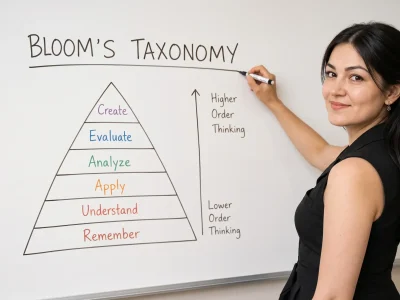

FPSC Assistant Professor BS-18 Test Preparation
FPSC Assistant Professor Test Preparation 2026 at Mahida Academy is a comprehensive course designed according to the latest FPSC syllabus. The program covers English and Teaching Methodology concepts required for the BS-18 Assistant Professor examination. With structured lessons, exam-focused practice, and conceptual clarity, this course prepares candidates to perform confidently in the written test and succeed in educational leadership roles.
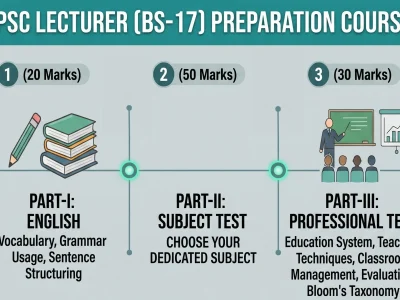
FPSC Lecturer BS-17 Test Preparation
FPSC Lecturer (BS-17) Test Preparation Course at Mahida Academy is a comprehensive, exam-focused program designed according to the prescribed official FPSC syllabus. The course covers the complete paper pattern, including English language proficiency, specialized subject knowledge, and core pedagogical domains such as teaching methodology, assessment & evaluation, classroom management, and Bloom's taxonomy. With structured lessons, targeted practice, and high-yield conceptual coverage, this program prepares candidates to excel in the written examination and secure a lecturer position under Federal Public Service Commission.

AKU ASDH Entrance Test Preparation
Mahida Academy’s AKU ASDH Entrance Test Preparation is designed to closely reflect the official exam pattern and difficulty level. It covers English, Science, and Mathematics through focused practice, MCQs, and full-length mock tests. Delivered via an interactive LMS and developed by experts, this course prepares you to excel with confidence—not just pass the exam.

Biology-12 AKUEB
A complete, exam-focused Biology 12 for AKUEB course designed in strict alignment with official SLOs to ensure targeted preparation. Includes comprehensive notes, video lessons, practice quizzes, and fully solved past papers—everything you need to learn effectively and succeed in your board exams.

Course Features
- Lectures 83
- Quiz 0
- Duration 150 days
- Skill level All levels
- Language English
- Students 131
- Assessments Yes