
15.2 Classification of Organic Compounds
⚗️ Lesson 2: Classification of Organic Compounds
Chapter 15: Organic Compounds
Student Learning Outcomes (SLOs 15.2.1 – 15.2.2)
Learning Objectives
- Classify organic molecules structurally into Acyclic, Alicyclic, Aromatic, and Heterocyclic systems.
- Know the visual identification and general formulas of the 21 primary functional groups.
- Differentiate complex oxygen, nitrogen, and sulfur-containing derivatives.
📺 Video Lesson: Structure and Functional Groups
Learn to navigate the complex structural tree of organic chemistry and identify reactive molecular hubs.
1. Structural Classification of Organic Compounds (SLO 15.2.1)
Hydrocarbons are organic compounds that contain only carbon and hydrogen atoms. The unique ability of carbon atoms to bond with each other to form chains or rings is known as catenation.
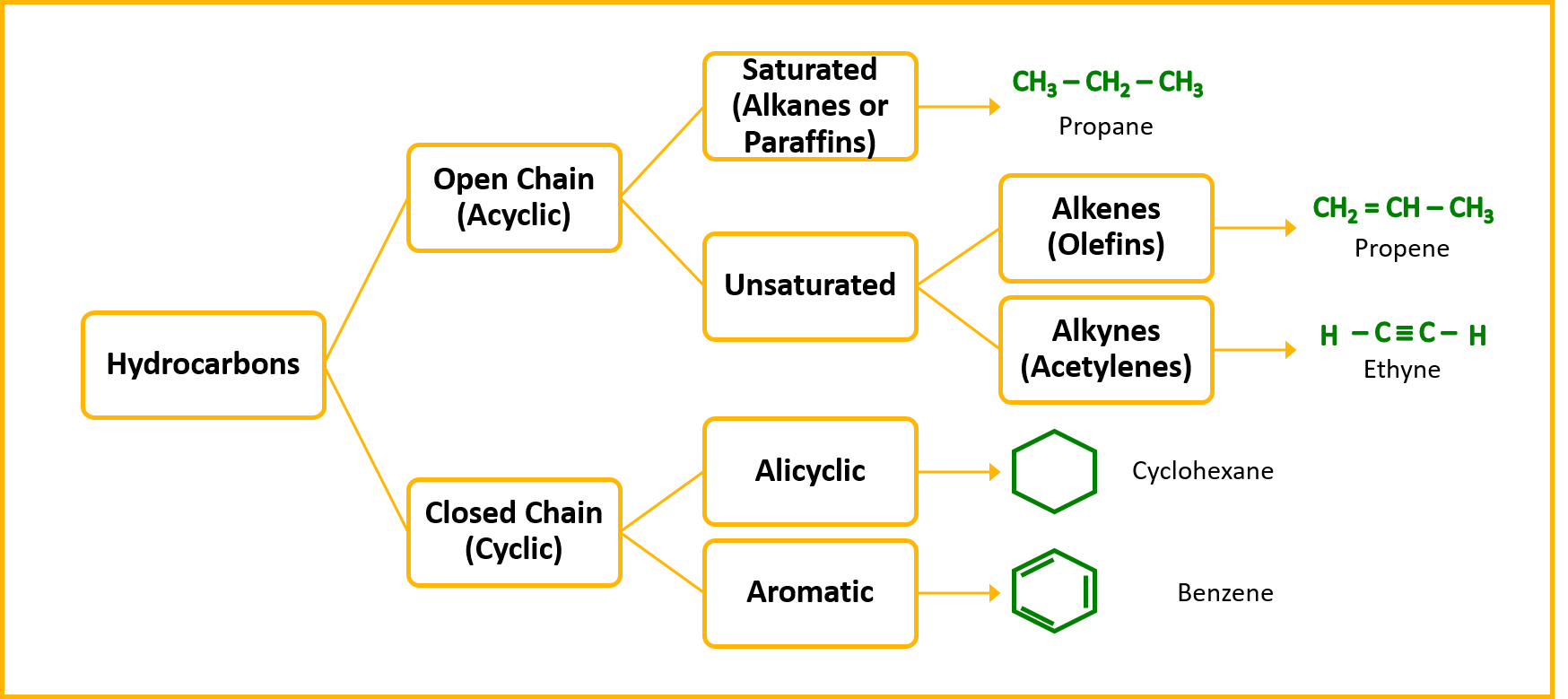
 1. Acyclic (Open Chain) Compounds
Also known as Aliphatic compounds. The carbon atoms are connected in straight or branched chains, without forming any closed rings.
-
- Straight Chain: e.g., n-Butane ($CH_3-CH_2-CH_2-CH_3$)

- Branched Chain: e.g., 2-methylebutane ($CH_3-CH_2-CH(CH_3)-CH_3$)
- Straight Chain: e.g., n-Butane ($CH_3-CH_2-CH_2-CH_3$)
Can be further divided into Saturated and Unsaturated compounds
- Saturated Hydrocarbons (Alkanes or Paraffins): e.g., Butane ($CH_3-CH_2-(CH_2-CH_3$)

Butane - Unsaturated Hydrocarbons (Alkenes or Olefins) and (Alkynes or Acetylenes): e.g.,
- 1-Pentene ($CH_2=CH_2-CH_2-CH_2-CH_3$) (An alkene)

- 1-Pentyne ($CH≡CH_-CH_2-CH_2-CH_3$) (An alkyne)

- 1-Pentene ($CH_2=CH_2-CH_2-CH_2-CH_3$) (An alkene)
 2. Cyclic (Closed Chain) Compounds
The carbon atoms join to form one or more closed rings. These are subdivided based on the atoms present in the ring:
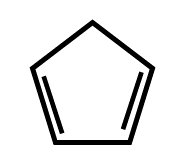
- Homocyclic: The ring consists only of carbon atoms. Example: Cyclo-1,3-pentadiene
- Heterocyclic: The ring contains carbon AND at least one other element (like N, O, S or P). Examples: Pyridine, Furan.
Element Example Structure N Pyridine 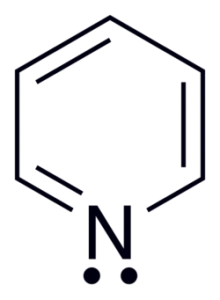
O Furan 
S Thiophene 
P Phosphole 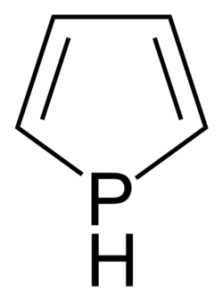
Subdivisions of Homocyclic Compounds:
- Alicyclic: Non-aromatic rings that behave chemically very much like aliphatic open-chain compounds (e.g., Cyclohexane).
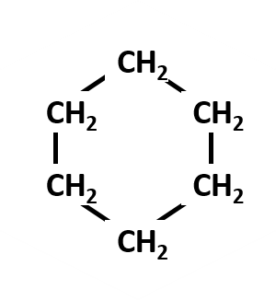
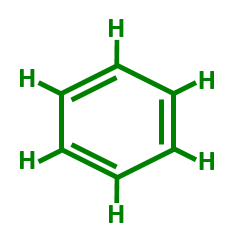
Cyclohexane - Aromatic: Highly stable rings containing delocalized (alternating) $\pi$-electrons, such as Benzene ($C_6H_6$) and its derivatives.
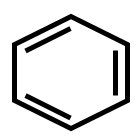
Benzene
2. Identifying Functional Groups (SLO 15.2.2)
A Functional Group is an atom, or a specific group of atoms, that dictates the unique chemical properties and reactivity of an organic molecule. While the alkyl chain ($R$) provides the physical properties (like boiling point), the functional group is the reactive “engine room.”
A. Hydrocarbons and Halides
| Class | Group Structure | Example | Structure |
|---|---|---|---|
| Alkane | $C-C$ (Single bond) | Ethane ($CH_3-CH_3$) | 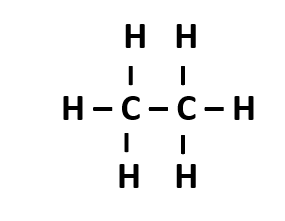 |
| Alkene | $C=C$ (Double bond) | Ethene ($CH_2=CH_2$) |  |
| Alkyne | $C \equiv C$ (Triple bond) | Ethyne ($CH \equiv CH$) | 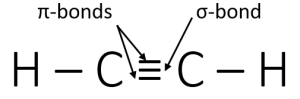 |
| Arene | Benzene ring ($Ar-H$) | Benzene ($C_6H_6$) | |
| Halide | $-X$ ($F, Cl, Br, I$) | Chloromethane ($CH_3-Cl$) | 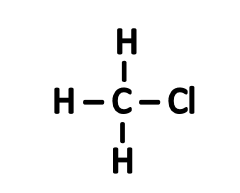 |
B. Oxygen-Containing Groups
| Class | Group Structure | Example | Structure |
|---|---|---|---|
| Alcohol | $-OH$ (Hydroxyl) | Ethanol ($CH_3CH_2-OH$) |  |
| Ether | $-O-$ (Oxy) | Dimethyl ether ($CH_3-O-CH_3$) |  |
| Aldehyde | $-CHO$ (Formyl) | Propanal ($CH_3-CH_2-CHO$) |  |
| Ketone | $>C=O$ (Carbonyl) | Propanone ($CH_3-CO-CH_3$) |  |
| Carboxylic Acid | $-COOH$ (Carboxyl) | Benzoic Acid ($C_6H_5-COOH$) |  |
| Ester | $-COOR$ | Methyl ethanoate ($CH_3-COO-CH_3$) | 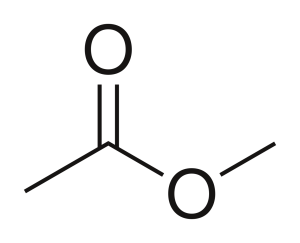 |
| Acid Chloride | $-COCl$ | Ethanoyl chloride ($CH_3-COCl$) |  |
| Acid Anhydride | $-(CO)O(CO)-$ | Ethanoic anhydride ($(CH_3CO)_2O$) | 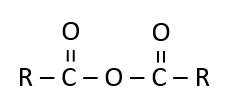 |
C. Nitrogen & Sulfur-Containing Groups
| Class | Group Structure | Example | Structure |
|---|---|---|---|
| Amine | $-NH_2$ (Amino) | Methylamine ($CH_3-NH_2$) |  |
| Acid Amide | $-CONH_2$ | Ethanamide ($CH_3-CONH_2$) |  |
| Nitrile | $-C \equiv N$ (Cyano) | Ethanenitrile ($CH_3-CN$) |  |
| Nitro | $-NO_2$ | Nitrobenzene ($C_6H_5-NO_2$) |  |
| Thiol | $-SH$ (Mercapto) | Methanethiol ($CH_3-SH$) |  |
| Sulphide | $-S-$ (Thioether) | Dimethyl sulphide ($CH_3-S-CH_3$) |  |
| Sulphoxide | $-S(=O)-$ | Dimethyl sulphoxide ($DMSO$) |  |
| Sulphone | $-SO_2-$ | Dimethyl sulphone | 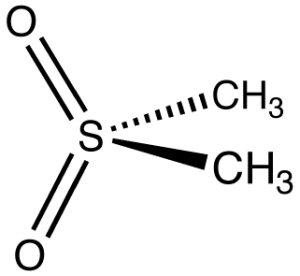 |
⚡ Quick-Fact: The Vital Force Myth
For centuries, scientists believed organic compounds could only be produced by living organisms (Vital Force Theory). This was shattered in 1828 when Friedrich Wöhler accidentally synthesized Urea ($NH_2-CO-NH_2$), an organic acid amide, simply by heating ammonium cyanate, an inorganic salt!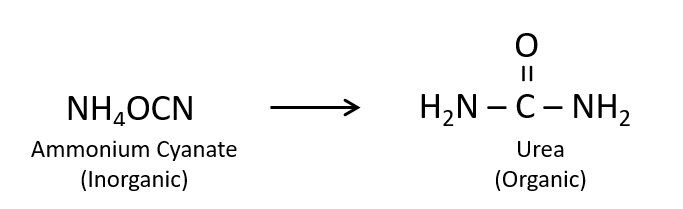
🎯 AKU Exam Insights
- The Ether vs. Ester Trap: A highly tested visual trap! An Ether has an oxygen bridging two alkyl groups ($R-O-R’$). An Ester has a carbonyl group adjacent to that bridging oxygen ($R-CO-O-R’$). Do not miss the $C=O$!
Ether Ester 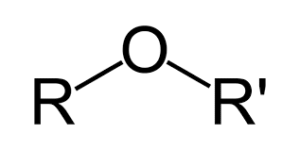

- Amine vs. Amide Classification: If nitrogen is attached directly to a standard alkyl carbon, it is an Amine ($R-NH_2$). If the nitrogen is attached directly to a carbonyl carbon, the chemistry changes entirely, and it is classified as an Amide ($R-CONH_2$).
Amine Amide 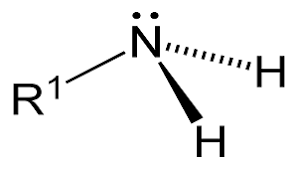
3. Concept Check
1. An unknown organic molecule features a 6-carbon ring with alternating double bonds. One of the carbon atoms in the ring is replaced by a Nitrogen atom. How is this compound structurally classified?
View Answer & Explanation
Correct: Heterocyclic and Aromatic
Explanation: The presence of alternating double bonds in a ring indicates an aromatic system. Because a carbon atom within the ring is replaced by a heteroatom (Nitrogen), it is specifically a heterocyclic aromatic compound (this is the structure of Pyridine).
2. The functional group $-SH$ is characteristic of which class of organic compounds?
View Answer & Explanation
Correct: Thiols
Explanation: The $-SH$ group is known as the mercapto or thiol group. It is the sulfur analogue of an alcohol ($-OH$). Sulphides, by contrast, have a sulfur atom bridging two carbon chains ($-S-$).
3. Which functional group is defined by an oxygen atom bonded directly to two different alkyl chains ($R-O-R’$)?
View Answer & Explanation
Correct: Ether
Explanation: An ether consists of an oxygen atom serving as a bridge between two alkyl groups. If one of those adjacent carbons were a carbonyl ($>C=O$), it would be an ester.
➡ Coming Next
15.3 Isomerism
🔀