
Chemistry of Living Things
Overview
- Life’s chemical basis: All living organisms are governed by the same biochemical laws—no exceptions, from bacteria to humans.
- Atoms and molecules: Matter is built from atoms; monomers assemble into polymers via condensation reactions and are broken by hydrolysis.
- Weak interactions: Hydrogen bonds, ionic interactions, and van der Waals forces are individually weak but collectively crucial for biological structure and function.
- Water: A polar molecule and universal solvent; enables metabolic reactions, buffers temperature, and participates directly in biochemical reactions.
- Carbohydrates: Serve as short- and long-term energy stores (glucose, starch, glycogen) and provide structural support (cellulose, chitin).
- Lipids: Include triglycerides (energy storage), phospholipids (membrane structure), and steroids (hormones like estrogen and testosterone).
- Proteins: Polymers of amino acids; function depends on precise folding across four structural levels.
- Nucleic acids: DNA stores hereditary information; RNA enables gene expression and protein synthesis.
- Enzymes: Biological catalysts that lower activation energy, increase reaction rate, and exhibit specificity and saturation.
- IMAT / MCAT focus: Expect structure–function links, reaction types, and biochemical reasoning rather than memorization.
1. Atoms, Molecules, and Weak Biological Interactions
Understanding chemical interactions is foundational for IMAT.
Life emerges from atoms forming molecules, which assemble into complex biological systems through both
strong covalent bonds and weak reversible interactions.
- Monomers and Polymers:
- Monomers: glucose, amino acids, nucleotides, fatty acids.
- Polymers: polysaccharides, proteins, DNA/RNA.
- Exam Tip: Functional groups determine chemical behavior:
–OH (polarity), –NH₂ (basic), –COOH (acidic),
–PO₄ (energy transfer, charge).
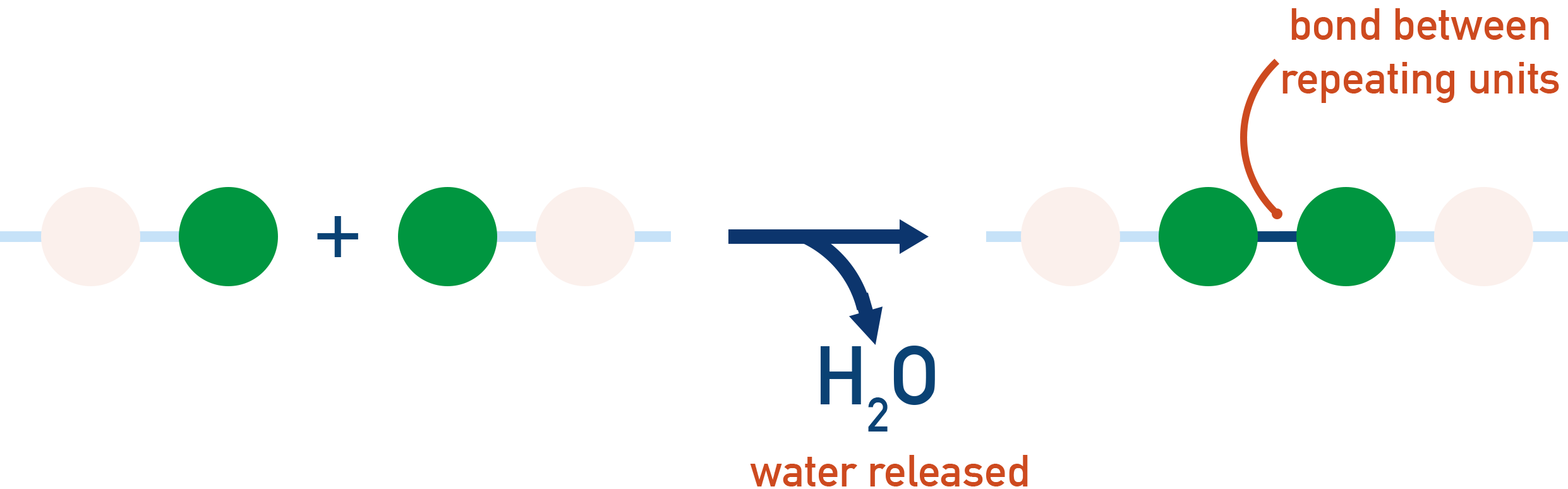
- Condensation (Dehydration Synthesis):
- Formation of covalent bonds by removal of water.
- Examples:
- Glucose + Glucose → Maltose + H₂O (glycosidic bond)
- Amino acid + Amino acid → Dipeptide + H₂O (peptide bond)
- Nucleotide + Nucleotide → Dinucleotide + H₂O (phosphodiester bond)
- MCAT focus: Identify the bond type and the atoms involved.
- Hydrolysis:
- Breaks polymers by adding water.
- Essential for digestion and cellular metabolism.
- Example: Maltose + H₂O → 2 Glucose
- Weak Biological Interactions:
- Hydrogen bonds: Result from electronegativity differences; stabilize
DNA base pairing, protein folding, and water cohesion. - Ionic interactions: Attractions between charged groups (e.g., lysine⁺ and glutamate⁻);
sensitive to pH changes. - Van der Waals forces: Weak, transient attractions critical for precise molecular fit
(enzyme–substrate interactions). - IB / MCAT insight: Disrupting weak interactions denatures proteins without breaking covalent bonds.
- Hydrogen bonds: Result from electronegativity differences; stabilize
Key Points for IMAT:
- Recognize monomers, polymers, and their bond types.
- Distinguish condensation from hydrolysis reactions.
- Understand how pH and temperature affect weak interactions.
- Link molecular structure to biological function.
2. Water and Its Solvent Properties
Water is the medium of life. It constitutes approximately 70–80% of most cells, and provides the environment in which nearly all biochemical reactions occur. Water’s biological importance arises from its polarity and its ability to form extensive hydrogen bonds, which give rise to properties essential for cellular stability, metabolism, and survival.
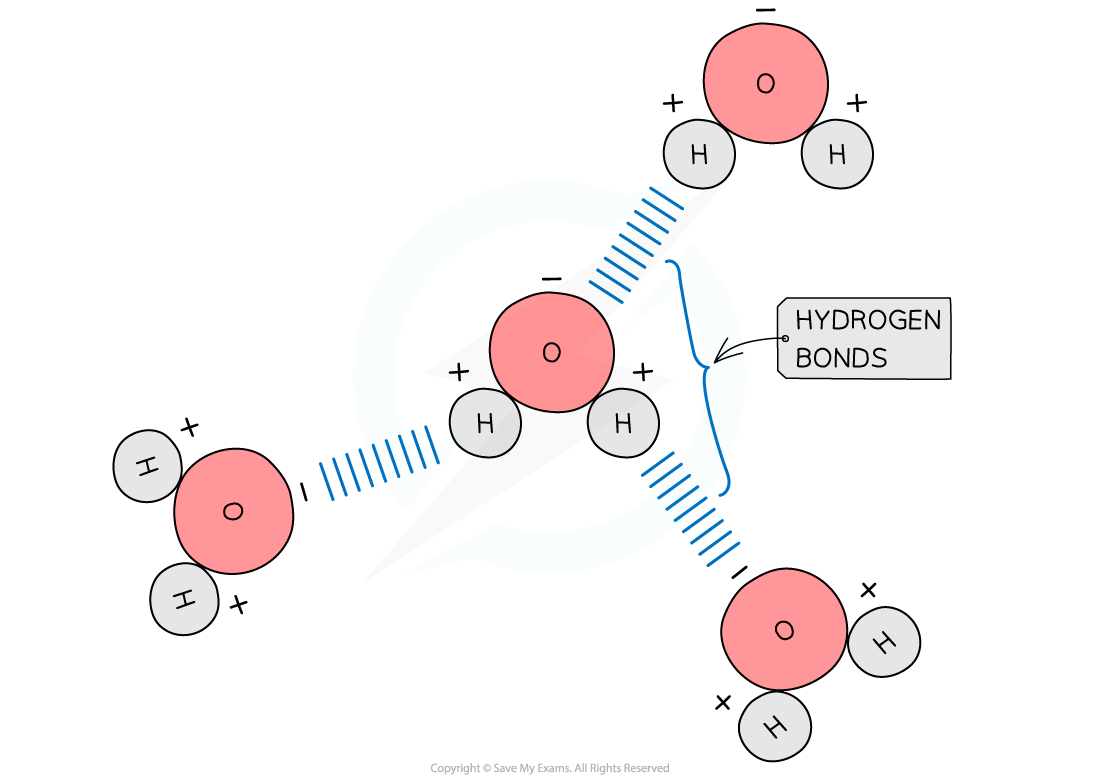
- Polarity and Hydrogen Bonding: Each water molecule consists of two hydrogen atoms covalently bonded to one oxygen atom.
Because oxygen is more electronegative than hydrogen, it pulls shared electrons
closer, creating a partial negative charge (δ–) on oxygen and
partial positive charges (δ+) on the hydrogens. This uneven charge distribution makes water a polar molecule and allows
neighboring water molecules to attract one another via
hydrogen bonds, where the δ+ hydrogen of one molecule is attracted to
the δ– oxygen of another. Although hydrogen bonds are weak individually, their collective effect gives water
several vital biological properties:- High specific heat capacity – resists temperature change, stabilizing
internal conditions in cells and aquatic ecosystems - Cohesion and surface tension – enables continuous water columns in
plant xylem (transpiration stream) - Thermal stability – protects organisms from rapid environmental
temperature fluctuations
Exam relevance: IMAT questions frequently ask you to
connect hydrogen bonding to water’s high specific heat, cohesion, and biological
significance. - High specific heat capacity – resists temperature change, stabilizing
- Solvent Properties: Water is a polar solvent, meaning it readily dissolves
ionic compounds and polar molecules.
When salts dissolve, water molecules surround individual ions, forming
hydration shells that stabilize them via electrostatic attraction. Polar molecules such as glucose dissolve because they form hydrogen bonds with water.
In contrast, non-polar molecules (e.g., lipids) do not dissolve in water
and are described as hydrophobic. This exclusion of non-polar substances from water drives the
hydrophobic effect, a key principle underlying
cell membrane formation and protein folding. Water’s solvent role allows nutrients, gases, enzymes, and waste products to be
transported efficiently and ensures that metabolic reactions occur in an aqueous medium
where reactants can collide freely.Exam relevance: Be prepared to explain why polar and ionic
substances dissolve in water, while non-polar molecules do not.
- Role as a Metabolite: Water is not only a solvent but also an active participant in metabolism. It is:
- Consumed in hydrolysis reactions, where polymers are broken down into
monomers - Released in condensation (dehydration synthesis) reactions, where
monomers join to form polymers
Example: Hydrolysis of the disaccharide maltose:
Maltose + H₂O → 2 Glucose
IMAT Tip: Questions often ask whether water appears as a
reactant or a product in biological reactions. - Consumed in hydrolysis reactions, where polymers are broken down into
Key Points for IMAT:
- Water’s polarity enables hydrogen bonding and exceptional solvent properties.
- Hydrogen bonds explain water’s thermal stability, cohesion, and surface tension.
- The hydrophobic effect drives membrane formation and protein folding.
- Water functions as both a solvent and a reactant in metabolism.
- Always link molecular structure to biological function and large-scale effects.
3. Biomolecules: Carbohydrates, Lipids, Proteins, Nucleic Acids
Biomolecules are essential organic molecules that provide energy, structure, information storage, and regulatory functions. Understanding their structures, functions, and reactions is crucial for IMAT, AP, and IB exams.
3.1 Carbohydrates
Carbohydrates are organic compounds composed of carbon, hydrogen, and oxygen, primarily serving as energy sources and structural components.
- Monosaccharides: Simple sugars such as glucose, fructose, and galactose. They are the building blocks for larger carbohydrates and contain functional groups –OH and –CHO/–CO groups that participate in chemical reactions.
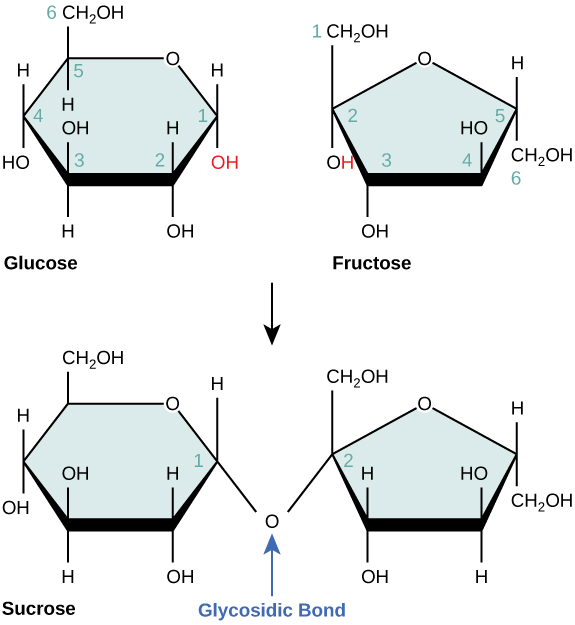
- Disaccharides: Formed via condensation reactions, which create glycosidic bonds between monosaccharides. Examples include:
- Maltose (glucose + glucose)
- Sucrose (glucose + fructose)
- Lactose (glucose + galactose)
Exam Tip: Be able to identify glycosidic bond type (α or β) and its significance in digestibility.
- Polysaccharides: Long chains of monosaccharides, serving either as energy storage or structural support.
- Starch (plants) – composed of α-glucose, includes amylose (linear) and amylopectin (branched). Energy storage molecule in plants; soluble and easy to mobilize.
- Glycogen (animals) – α-glucose, highly branched for rapid glucose release during high-energy demand.
- Cellulose (plants) – β-glucose, unbranched chains form strong microfibrils via hydrogen bonds; provides rigidity to cell walls. Humans lack the enzyme cellulase to digest cellulose.
Key Points for IMAT:
- Monosaccharides are the simplest carbohydrates and serve as the building blocks for larger molecules.
- Disaccharides form via condensation reactions; hydrolysis breaks them.
- Polysaccharides have specific structures that serve either for energy storage (starch, glycogen) or for structural roles (cellulose).
- Know the difference between α and β linkages and their biological significance.
3.2 Lipids
Lipids are hydrophobic molecules composed mainly of carbon, hydrogen, and a small amount of oxygen. They serve as long-term energy storage, structural components of membranes, and insulation in organisms. Lipids are nonpolar and do not dissolve in water, which is important for forming biological membranes and energy-rich droplets.
- Triglycerides: Triglycerides are formed by a condensation reaction between one glycerol molecule and three fatty acids, creating ester bonds. Fatty acids may be:
- Saturated: No double bonds, straight chains, solid at room temperature (e.g., butter).
- Unsaturated: One or more double bonds, kinked chains, liquid at room temperature (e.g., olive oil).
Function: Triglycerides store more energy per gram than carbohydrates due to long hydrocarbon chains; they also provide thermal insulation and cushioning for organs.
Exam Tip: Be ready to identify ester bonds and distinguish saturated vs. unsaturated triglycerides, including cis/trans configurations for IB/AP questions.
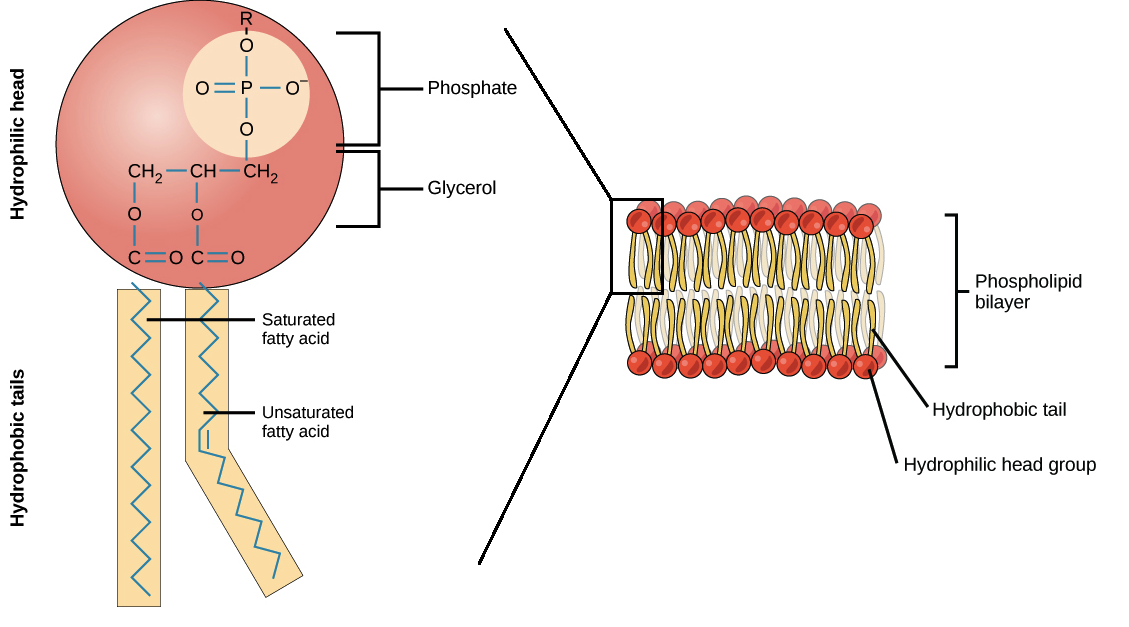
- Phospholipids: Phospholipids are similar to triglycerides, but one fatty acid is replaced by a phosphate group, giving them an amphipathic nature:
- Hydrophilic head: Polar phosphate group interacts with water.
- Hydrophobic tails: Nonpolar fatty acids avoid water.
This amphipathic property allows phospholipids to form bilayers, the fundamental structure of all cell membranes. They create a semi-permeable barrier controlling the movement of substances into and out of the cell.
IMAT Focus: Be able to explain how amphipathic structure drives membrane formation and contributes to selective permeability.
Key Points for IMAT:
- Triglycerides = glycerol + 3 fatty acids via ester bonds.
- Saturated vs. unsaturated fatty acids affect the physical properties and fluidity of lipids.
- Phospholipids are amphipathic and form bilayer membranes.
- Know the role of lipids in energy storage, insulation, and membrane structure.
- Be able to draw and label a phospholipid and indicate the hydrophilic/hydrophobic regions.
3.3 Proteins
Proteins are polymers of amino acids that perform a wide range of essential biological functions, including structural support, enzymatic catalysis, transport, signaling, and defense. Understanding protein structure and function is central for IMAT, AP, and IB exams.
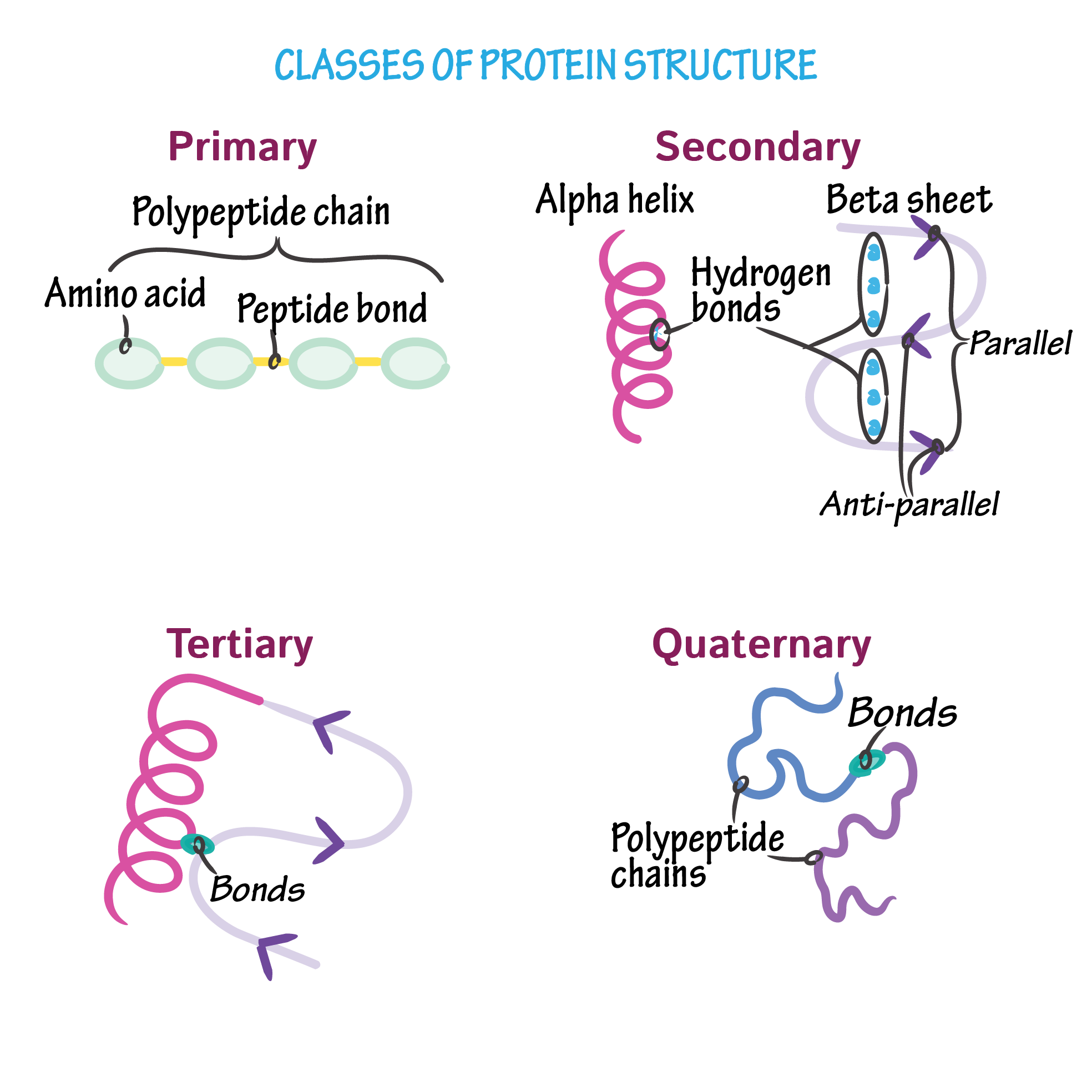
- Structure: Proteins are made of amino acids linked by peptide bonds through condensation reactions. The resulting chain of amino acids is called a polypeptide. Each amino acid has a central carbon (α-carbon), an amino group (–NH₂), a carboxyl group (–COOH), a hydrogen atom, and a variable side chain (R group) that determines chemical properties.
- Levels of Structure:
- Primary: Linear sequence of amino acids; determines all higher levels of structure. IMAT focus: Mutations affect primary structure, altering protein function.
- Secondary: Local folding into α-helices or β-pleated sheets stabilized by hydrogen bonds. Example: α-helix in keratin, β-sheets in silk fibroin.
- Tertiary: 3D folding of the polypeptide chain stabilized by hydrogen bonds, ionic bonds, hydrophobic interactions, and disulfide bridges (covalent S–S bonds). Determines functional shape of the protein.
- Quaternary: Assembly of multiple polypeptide chains into a functional protein complex, e.g., hemoglobin (α₂β₂). Not all proteins have quaternary structure.
- Functions:
- Structural: Collagen in connective tissue, keratin in hair and nails.
- Transport: Hemoglobin carries O₂, channel proteins allow selective passage of molecules.
- Enzymatic: Catalyze reactions (e.g., amylase, DNA polymerase).
- Signaling: Hormones like insulin and receptors.
- Defense: Antibodies in the immune system.
Key Points for IMAT:
- Peptide bonds link amino acids into polypeptides.
- Understand how each structural level contributes to protein function.
- Mutations affect primary structure, which may disrupt tertiary/quaternary structure.
- Hydrogen bonds, ionic interactions, and disulfide bridges stabilize folding.
- Know examples of structural, transport, enzymatic, signaling, and defense proteins.
3.4 Nucleic Acids
Nucleic acids are polymers of nucleotides that store, transmit, and express genetic information. They are fundamental to inheritance and protein synthesis, making them a key topic for IMAT, AP, and IB exams.
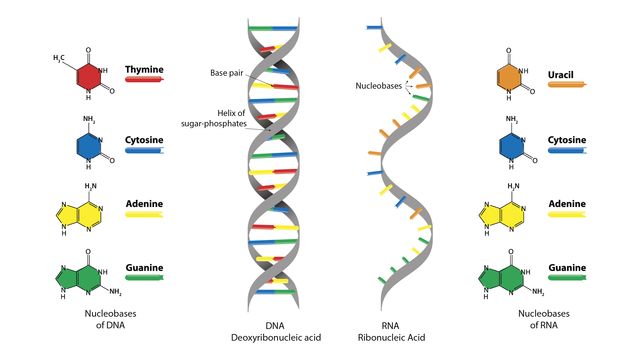
- Nucleotides:A nucleotide consists of three components:
- Pentose sugar: Deoxyribose in DNA, ribose in RNA.
- Phosphate group: Links nucleotides together via phosphodiester bonds between the 3′ hydroxyl of one sugar and the 5′ phosphate of the next, forming the sugar-phosphate backbone.
- Nitrogenous base: Purines (Adenine, Guanine) and Pyrimidines (Cytosine, Thymine in DNA / Uracil in RNA). Base pairing via hydrogen bonds allows storage and transfer of information.
IMAT Tip: Know nucleotide components, directionality (5′ to 3′), and how phosphodiester bonds form the backbone.
- DNA (Deoxyribonucleic Acid): DNA is a double-stranded helix with antiparallel strands running in opposite directions (5’→3′ and 3’→5′). The strands are held together by hydrogen bonds between complementary bases:
- Adenine (A) pairs with Thymine (T) – 2 hydrogen bonds
- Cytosine (C) pairs with Guanine (G) – 3 hydrogen bonds
DNA stores genetic information, directing the synthesis of proteins via transcription and translation. Its stability comes from the sugar-phosphate backbone and base stacking interactions.
Exam Tip: Understand antiparallel structure, complementary base pairing, and hydrogen bonding.
- RNA (Ribonucleic Acid): RNA is typically single-stranded and contains ribose sugar. Uracil (U) replaces thymine (T) in RNA. RNA types include:
- mRNA: Messenger RNA, carries the genetic code from DNA to ribosomes.
- tRNA: Transfer RNA, brings amino acids to ribosomes during translation.
- rRNA: Ribosomal RNA, structural and catalytic component of ribosomes.
RNA is essential for translating DNA instructions into functional proteins.
IMAT Tip: Be able to compare DNA vs RNA in structure, sugar, bases, and function.
Key Points for IMAT:
- Nucleotides = pentose sugar + phosphate + nitrogenous base.
- DNA is double-stranded, antiparallel, with complementary base pairing (A-T, C-G).
- RNA is single-stranded, contains ribose and uracil, and functions in protein synthesis.
- Phosphodiester bonds link nucleotides to form the sugar-phosphate backbone.
- Understand roles of mRNA, tRNA, and rRNA in gene expression.
4. Enzymes and Their Role in Metabolism
Enzymes are biological catalysts—mostly proteins—that accelerate chemical reactions by lowering activation energy without being consumed. They are central to metabolism, regulating both intracellular and extracellular reactions with high specificity and efficiency.
- Biological Catalysis:
Enzymes increase reaction rates by stabilizing the transition state.- Amylase catalyzes starch → maltose
- DNA polymerase catalyzes nucleotide polymerization during replication
- Active Site and Specificity:
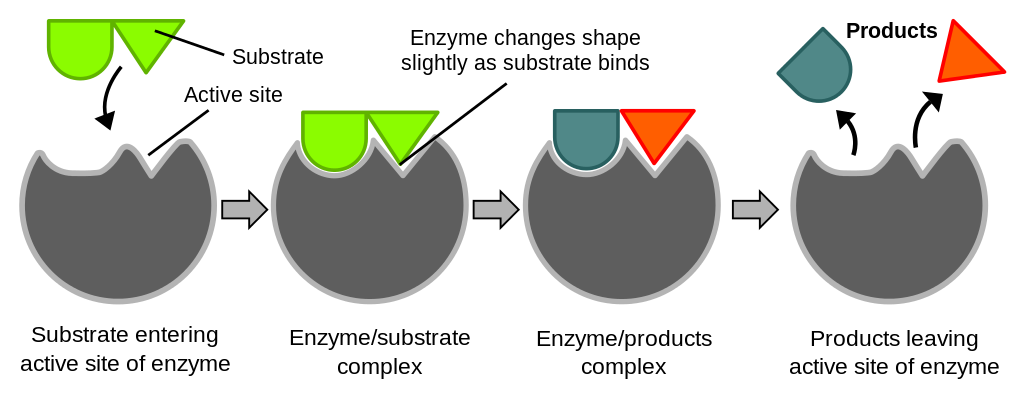
The active site is a three-dimensional region where the substrate binds.
Specificity arises from complementary shape, charge, and hydrophobic/hydrophilic interactions. - Lock-and-Key Model:
Rigid active site; explains basic specificity. - Induced-Fit Model:
Active site changes shape upon substrate binding, improving catalytic efficiency.
Classification of Enzymes
Enzymes are classified either by the type of reaction they catalyze or by the substrate they act upon. This classification is frequently tested in IMAT questions.
| Classification Basis | Enzyme Class | Reaction Type | Examples |
|---|---|---|---|
| Based on Reaction Type | Oxidoreductases | Oxidation–reduction (electron transfer) | Dehydrogenases, Oxidases |
| Transferases | Transfer of functional groups | Kinases, Transaminases | |
| Hydrolases | Bond cleavage using water | Lipases, Proteases, Amylases | |
| Lyases | Bond breakage without hydrolysis/ATP | Decarboxylases, Aldolases | |
| Isomerases | Intramolecular rearrangement | Mutases, Epimerases | |
| Ligases | Joining molecules using ATP | DNA Ligase, tRNA Synthetase | |
| Based on Substrate | Proteases | Protein digestion | Pepsin, Trypsin |
| Lipases | Lipid hydrolysis | Pancreatic lipase | |
| Carbohydrases | Carbohydrate breakdown | Amylase, Lactase | |
| Nucleases | DNA/RNA degradation | DNase, RNase |
Exam insight: If ATP is involved → think ligase.
If water breaks a bond → hydrolase.
If electrons move → oxidoreductase.
Why Enzymes Are Essential for Life
- Metabolism: Control and coordinate cellular reactions
- Digestion: Breakdown of food macromolecules
- Energy production: ATP synthesis (respiration)
- Synthesis: DNA replication and protein synthesis
- Regulation: Allosteric control of metabolic pathways
- Autophagy: Lysosomal recycling of cellular components
- Defense: Enzymatic and protein-based immune responses
- Transport & Hormones: Carrier proteins and regulatory molecules
- Factors Affecting Enzyme Activity:
- Temperature: Each enzyme has an optimum temperature (e.g., human enzymes ~37°C). Higher temperatures denature proteins; lower temperatures slow reactions.
- pH: Optimal pH varies with enzyme type:
- Pepsin (stomach) ~ pH 2
- Trypsin (small intestine) ~ pH 8
- Salivary amylase ~ pH 7
Extreme pH disrupts hydrogen and ionic bonds, causing denaturation.
- Substrate Concentration: Increasing substrate concentration increases the rate until the enzyme is saturated.
- Enzyme Concentration: Rate increases proportionally if substrate is abundant.
- Enzyme Inhibition:
- Competitive Inhibition: The inhibitor competes with the substrate for the active site. The effect can be overcome by increasing substrate concentration.
- Non-Competitive Inhibition: Inhibitor binds elsewhere (allosteric site), changing active site shape. Cannot be overcome by more substrate.
- Reversible vs Irreversible: Reversible inhibitors temporarily reduce activity; irreversible inhibitors permanently inactivate enzymes (e.g., nerve gas inhibits acetylcholinesterase).
- Coenzymes and Cofactors: Many enzymes require non-protein molecules to function:
- Cofactors: Inorganic ions (e.g., Mg²⁺, Zn²⁺) that assist catalysis.
- Coenzymes: Organic molecules (e.g., NAD⁺, FAD, coenzyme A) that carry chemical groups between reactions.
- Enzyme-Substrate Complex: Substrate binds to the enzyme to form a temporary enzyme-substrate complex, stabilizing the transition state and lowering activation energy. After reaction, products are released, and the enzyme is unchanged.
IMAT Key Points:
- Understand enzyme specificity, active site, and induced-fit vs lock-and-key models.
- Know optimal temperature and pH for major enzymes; effect of extremes causes denaturation.
- Differentiate types of enzyme inhibition (competitive, non-competitive, reversible, irreversible).
- Know common enzyme types (hydrolases, oxidoreductases, transferases, lyases, isomerases, ligases).
- Coenzymes and cofactors are often tested in metabolic pathways (e.g., NAD⁺ in respiration).
- Understand the enzyme-substrate complex and the mechanism of lowering activation energy.
- Be able to apply theory to examples: e.g., pepsin at pH 2, trypsin at pH 8, amylase in saliva.
5. Recommended Videos
Summary Notes for IMAT
- Hydrogen bonding is crucial for water properties, protein folding, and DNA structure.
- Polymers are built via condensation and broken via hydrolysis.
- Carbohydrates: energy (starch, glycogen) and structure (cellulose).
- Lipids: energy storage (triglycerides), membranes (phospholipids).
- Proteins: structure, transport, catalysis; remember 4 levels of structure.
- Nucleic acids: DNA stores, RNA transfers information.
- Enzymes: catalysts, specific, can be inhibited or denatured.