
12.1. Define and discuss the functions and importance of specific defense mechanisms. (Copy)
〰️ Unit 1: Specific Defense Mechanisms
Chapter 12: Immunity
Student Learning Outcomes (SLO 12.1)
Learning Objectives
- Define the Third Line of Defense (Adaptive Immunity) and differentiate it from innate non-specific mechanisms.
- Identify the core characteristics of specific immunity: specificity, systemic response, memory, and self-tolerance.
- Distinguish between Humoral (antibody-mediated) and Cell-Mediated immune responses, specifically noting the roles of B-lymphocytes and T-lymphocytes.
- Discuss the physiological importance of specific defense mechanisms in pathogen eradication and the biological basis of vaccines.
📺 Video Lesson: The Adaptive Immune System
An engaging biological breakdown explaining how your body mounts targeted, highly specific attacks against extracellular and intracellular pathogens using B cells and T cells.
1. The Third Line of Defense
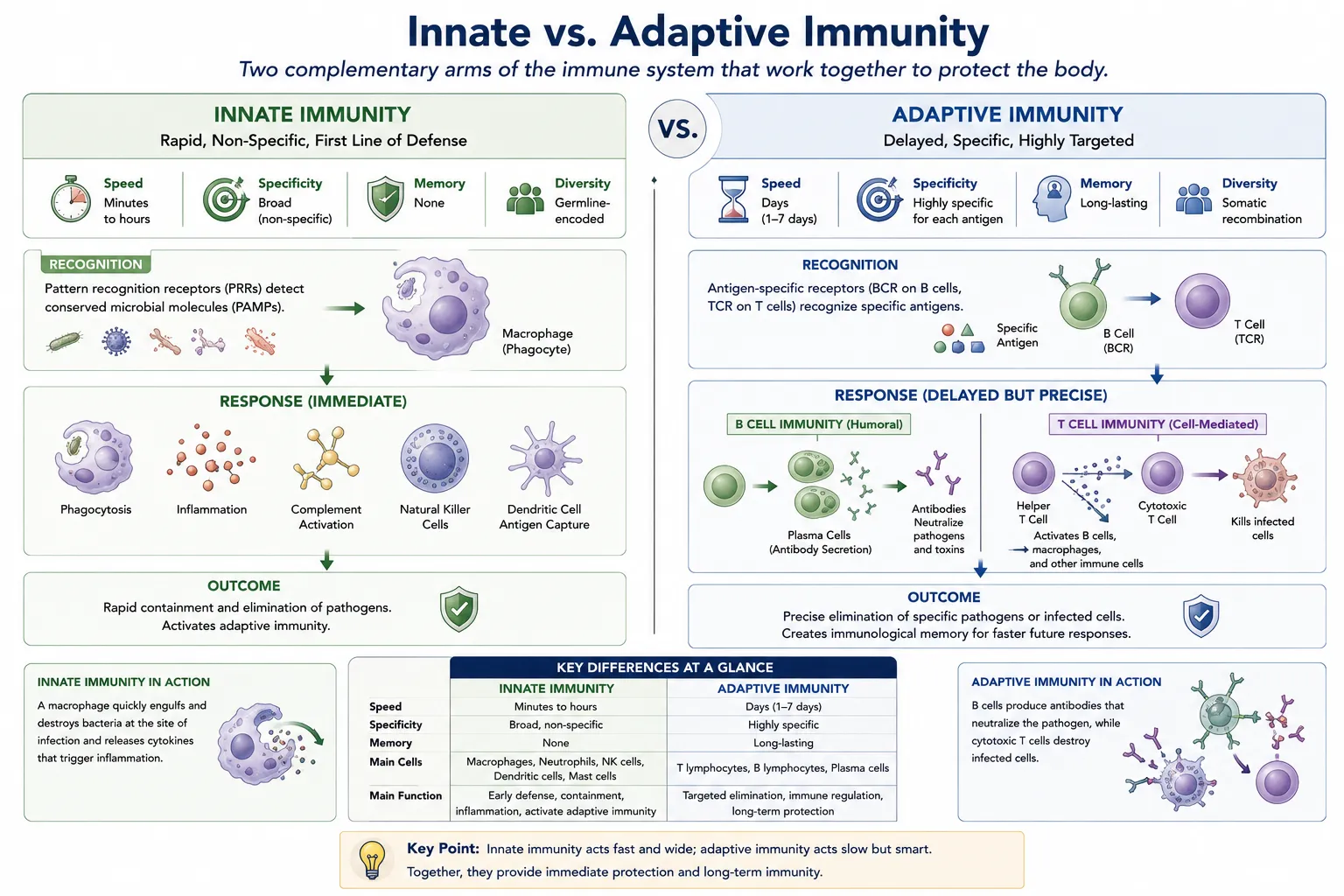
While the body’s first and second lines of defense (such as the skin, mucous membranes, and broad-spectrum phagocytes) are highly effective, they are innate—meaning they indiscriminately attack any foreign invader in the exact same way. However, if a virulent pathogen breaches these initial barriers, the body unleashes its elite Third Line of Defense: Specific (Adaptive) Immunity.
Specific immunity is a highly targeted defense system orchestrated by lymphocytes. While it takes several days to mobilize during an initial infection, it mounts a lethal, precise attack designed exclusively for the specific pathogen present, and importantly, it provides long-lasting future protection.
2. Core Characteristics of Specific Immunity
The functional superiority of the adaptive immune system relies entirely on four distinct biological characteristics:
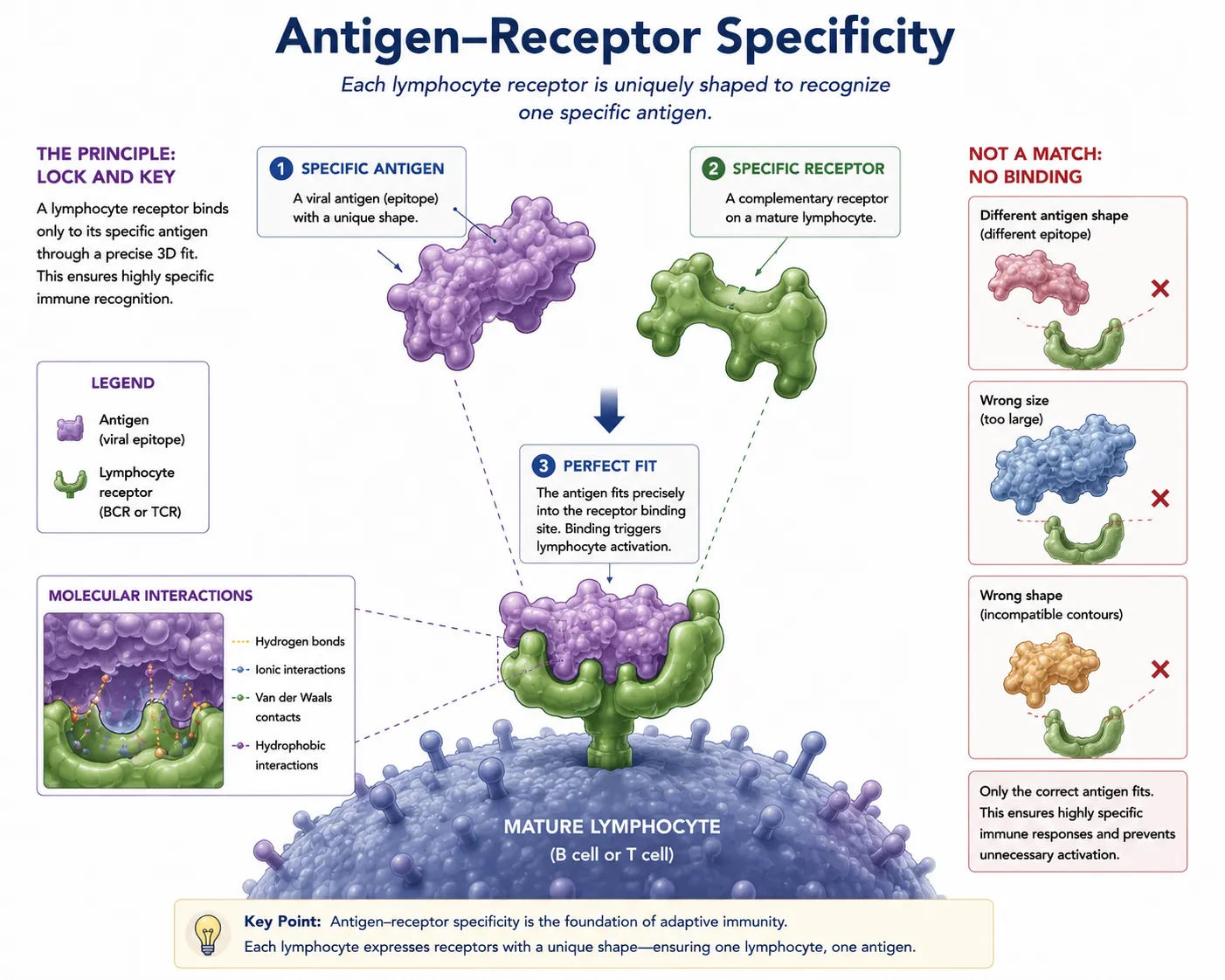
- Extreme Specificity: Lymphocytes possess membrane receptors customized to bind to one specific molecular shape known as an antigen. A lymphocyte tailored to attack the measles virus will completely ignore the influenza virus.
- Systemic Response: The defense is not restricted to the localized site of infection. Protective cells and antibodies circulate systemically throughout the entire bloodstream and lymphatic network.
- Immunological Memory: After overcoming a pathogen once, the system generates long-lived “memory cells.” If the exact same pathogen enters the body years later, the secondary response is so rapid and overwhelming that the pathogen is eradicated before clinical symptoms can even manifest.
- Self-Tolerance: The system undergoes rigorous “education” (primarily in the thymus and bone marrow) to distinguish between “self” and “non-self,” ensuring that immune cells do not accidentally destroy the body’s own healthy tissues.
3. The Two Branches of Specific Defense
Specific immunity is functionally divided into two overlapping arms, each specializing in a different type of pathogenic threat.
A. Humoral (Antibody-Mediated) Immunity
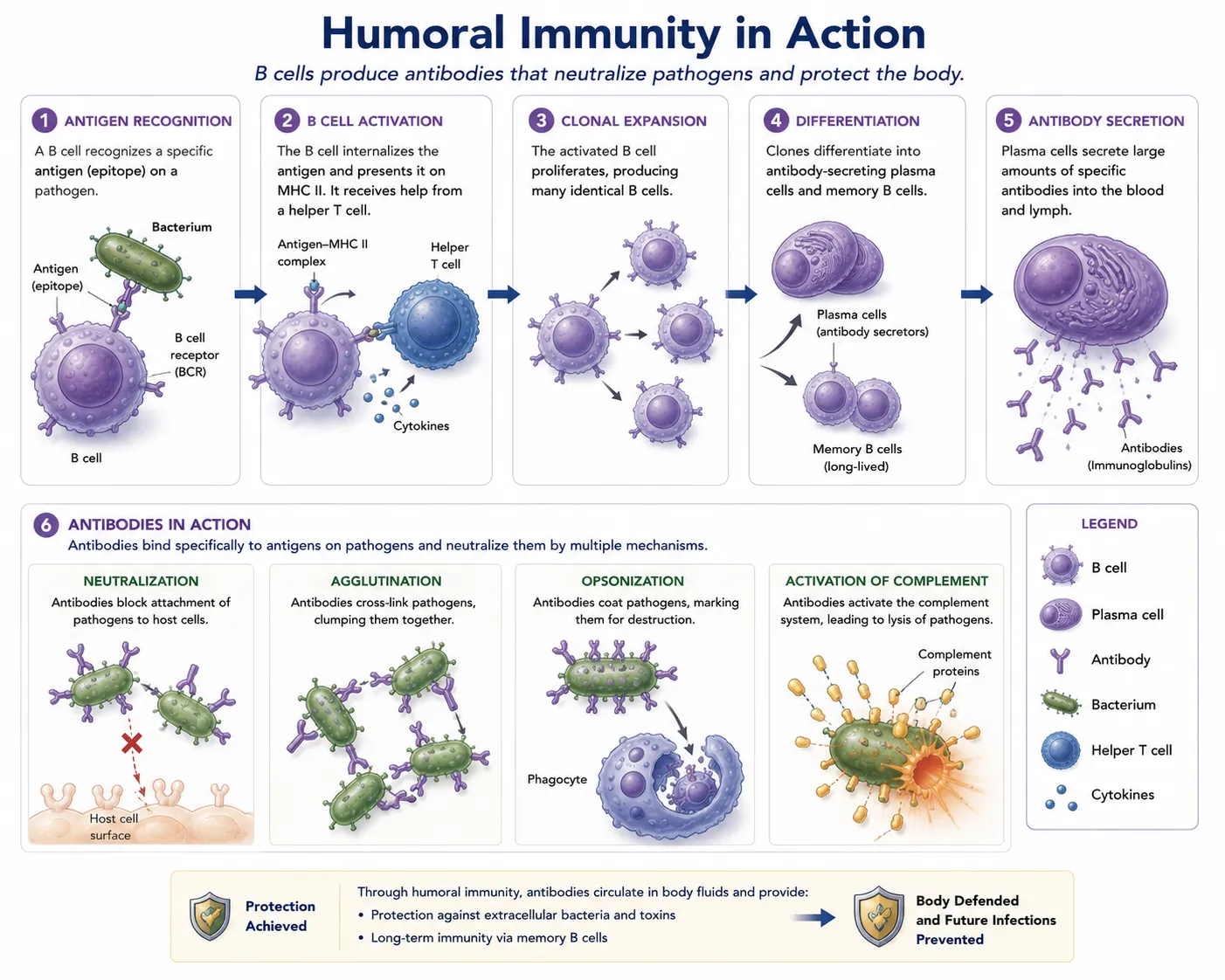
This branch is governed by B-lymphocytes (B-cells) and is directed against extracellular pathogens (such as bacteria, free-floating viruses, and toxins present in the blood or lymph).
- When a naive B-cell encounters its specific matching antigen, it undergoes clonal selection, dividing rapidly.
- The majority of these clones differentiate into Plasma Cells. These act as biological factories, secreting up to $2,000$ Antibodies (Immunoglobulins, e.g., $text{IgG}$) per second into the plasma.
- Antibodies do not directly kill pathogens. Instead, they bind to them, neutralizing their toxicity and tagging them (opsonization) for rapid destruction by phagocytes.
B. Cell-Mediated Immunity
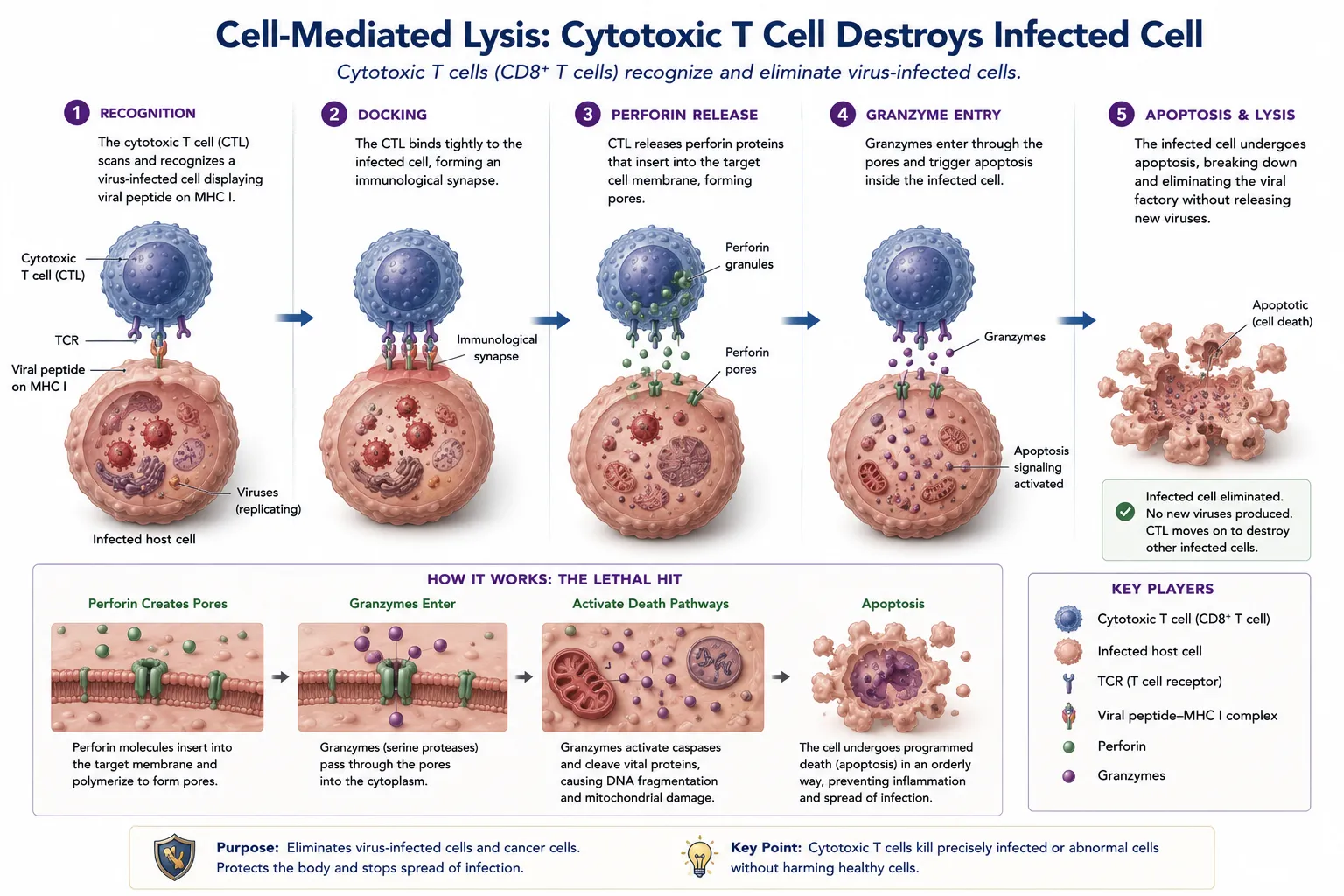
This branch is governed by T-lymphocytes (T-cells) and is directed against intracellular pathogens (viruses or bacteria that have already breached host cells and are hiding inside), as well as cancer cells and transplanted foreign tissues.
- T-cells are physically unable to recognize free-floating antigens. The antigen must be presented to them on the surface of a host cell via Major Histocompatibility Complex (MHC) proteins.
- Cytotoxic T-cells ($text{T}_text{C}$): Hunt down and physically destroy infected host cells by releasing perforins (which punch microscopic holes in the cell membrane) and granzymes (which trigger targeted cell suicide, or apoptosis).
- Helper T-cells ($text{T}_text{H}$): The master coordinators of the immune system. They secrete chemical signals called cytokines that mobilize and heavily amplify the responses of both Cytotoxic T-cells and B-cells.
🎯 MDCAT Exam Insights
- Primary vs. Secondary Responses: Exam questions frequently utilize antibody concentration graphs. Understand that a vaccine triggers a primary immune response safely. The real value is the subsequent secondary response upon re-exposure, which generates a massive, nearly immediate spike in antibodies (specifically $text{IgG}$) due to the presence of memory cells.
- MHC Restriction: A vital concept to master is that T-cells are MHC restricted. Unlike B-cells, T-cells cannot detect a virus floating in the blood. They can only initiate a defense mechanism if the viral antigen is formally “presented” to them attached to an MHC protein on the surface of an Antigen-Presenting Cell (APC).
- HIV Target: Be prepared to identify the specific cellular target of the Human Immunodeficiency Virus (HIV). HIV selectively infects and destroys Helper T-cells ($text{T}_text{H}$). Because Helper T-cells coordinate both humoral and cell-mediated branches, their destruction leads to a total collapse of the specific defense system (AIDS).
📝 Concept Check
1. Which of the following defining characteristics strictly separates the specific (adaptive) immune system from the non-specific (innate) immune system?
The utilization of phagocytic cells like macrophages to engulf pathogens.
The generation of immunological memory for a significantly faster secondary response.
The presence of physical and chemical barriers such as the epidermis and gastric acid.
Check Answer
Explanation: Innate immunity acts the exact same way every single time a pathogen enters the body, regardless of past exposures. Specific immunity creates memory T and B cells that provide a vastly accelerated and amplified response upon any subsequent exposures to the exact same antigen.
2. A virus successfully breaches the bloodstream and invades the epithelial cells of the respiratory tract, hiding entirely within the intracellular fluid. Which specific branch of the immune system is primarily responsible for identifying and destroying these infected host cells?
Cell-Mediated Immunity via Cytotoxic T-cells.
Non-specific defense via circulating antibodies.
The Complement System.
Check Answer
Explanation: Once a pathogen hides inside a host cell, it is completely invisible to circulating antibodies (which cannot cross cell membranes). Therefore, Cell-Mediated Immunity takes over. Cytotoxic T-cells detect the viral antigens presented on the surface of the infected host cell and initiate targeted apoptosis to destroy the viral factory.
3. The administration of a vaccine relies entirely on the functional capacity of the specific immune system. Following a successful vaccination, what specific biological component is formed that provides long-term immunity?
Long-lived Memory B-cells and Memory T-cells that remain dormant until re-exposure.
A thickened mucous membrane barrier to physically trap the specific pathogen.
Cytokines that continuously circulate to proactively destroy the pathogen.
Check Answer
Explanation: Vaccines trigger a primary immune response without causing actual disease. The initial effector cells die off, but the memory cells generated during clonal selection survive for decades. When the virulent pathogen is encountered later, these memory cells instantly proliferate into effector cells, preventing infection.
➡ Coming Next
Chapter 13, Unit 1: Discuss the Functions of the Main Part of the Respiratory System
⏱️