
- 16 Sections
- 431 Lessons
- 365 Days
- AKU ASDH Entrance Test Syllabus4
- Diagnostic Tests2
- Biology Part I (Grade XI)138
- 3.1Curriculum-Biology (Copy)
- 3.21.1. Introduction to Biology-Major Fields of Specialisation in Biology (Copy)
- 3.31.2. Levels of Biological Organisation (Copy)
- 3.41.3. Biological Method (Copy)
- 3.51.4. Services of Biology (Copy)
- 3.61.5 Exercise: Introduction to Biology Practice Quiz-1 (Copy)
- 3.71.6 Introduction to Biology Quiz (Timed) (Copy)14 Questions
- 3.82.1. Biological Molecules-Introduction to Biochemistry (Copy)
- 3.92.2. Properties of Carbon (Copy)
- 3.102.3. Chemical Nature and Importance of Water (Copy)
- 3.112.4. Carbohydrates (Copy)
- 3.122.5. Lipids (Copy)
- 3.132.6. Proteins (Copy)
- 3.142.7. Nucleic Acids. (Copy)
- 3.152.8. Conjugated Molecules (Copy)
- 3.162.9 Exercise: Biological Molecules Quiz-1 (Copy)
- 3.172.10 Exercise: Biological molecules Quiz-2 (Copy)
- 3.183.1. Enzymes-Structure of Enzyme (Copy)
- 3.193.2. Characteristics of Enzymes (Copy)
- 3.203.3. Mechanism of Enzyme Action (Copy)
- 3.213.4. Factors Affecting Enzyme Action (Copy)
- 3.223.5. Enzyme Inhibition (Copy)
- 3.233.6 Classification of Enzymes (Copy)
- 3.243.7 Enzymes-Summary Quiz (Copy)
- 3.253.8 Exercise: Enzymes Quiz-1 (Copy)
- 3.263.9 Enzymes Quiz (Timed) (Copy)15 Minutes10 Questions
- 3.274.1 Discovery of Cell (Copy)
- 3.284.2 Microscope (Copy)
- 3.294.3 Techniques used in Cell Biology (Copy)
- 3.304.4 Structure of Animal and Plant Cell (Copy)
- 3.314.5 The Cell-Summary Quiz (Copy)
- 3.324.6 Exercise: The Cell Quiz-1 (Copy)
- 3.334.7 Exercise: The Cell Quiz-2 (Copy)
- 3.344.8 The Cell Quiz (Timed) (Copy)33 Minutes22 Questions
- 3.355.1 Classification of Living Organisms (Copy)
- 3.365.2 Binomial Nomenclature (Copy)
- 3.375.3 Two and Five-Kingdom System (Copy)
- 3.385.4 Characteristics of Viruses (Copy)
- 3.395.5 Classification of Viruses and Viral Diseases (Copy)
- 3.405.6 Life Cycle of Viruses (Copy)
- 3.415.7 Viral Diseases (Copy)
- 3.425.8 Prions and Viroids (Copy)
- 3.435.9 Economic and Human Loss by Viruses (Copy)
- 3.445.10 Classification and Acellular Life-Summary Quiz (Copy)
- 3.455.11 Exercise: Classification and Acellular Life Quiz-1 (Copy)
- 3.465.12 Exercise: Classification and Acellular Life Quiz-2 (Copy)
- 3.476.1 Kingdom Prokaryotae-Characteristic Features of Prokaryotes (Copy)
- 3.486.2 Morphology of Bacteria (Part-I) (Copy)
- 3.496.2 Morphology of Bacteria (Part-II) (Copy)
- 3.506.3 Nutrition in Bacteria (Copy)
- 3.516.4 Respiration in Bacteria (Copy)
- 3.526.5 Locomotion in Bacteria (Copy)
- 3.536.6 Growth in Bacteria (Copy)
- 3.546.7 Reproduction in Bacteria (Copy)
- 3.556.8 Economic Importance of Bacteria (Copy)
- 3.566.9 Control and Prevention of Bacteria (Copy)
- 3.576.9.3 Antibiotics — Uses and Misuses (Copy)
- 3.586.10 Cyanobacteria (Copy)
- 3.596.11 Kingdom Prokaryotae-Summary Quiz (Copy)
- 3.606.12 Exercise: Kingdom Prokaryotae Quiz-1 (Copy)
- 3.616.13 Exercise: Kingdom Prokaryotae Quiz-2 (Copy)
- 3.627.1 Kingdom Protista-Unifying Features (Copy)
- 3.637.2 Diversity among Protists (Copy)
- 3.647.3 Animal-like Protists (Copy)
- 3.657.4 Plant-like Protists (Copy)
- 3.667.5 Fugus-like Protists (Copy)
- 3.677.6 Kingdom Protista-Summary Quiz (Copy)
- 3.687.7 Kingdom Protista (Protoctista) Quiz-1 (Copy)
- 3.697.8 Kingdom Protista (Protoctista) Quiz-2 (Copy)
- 3.708.1 Kingdom Fungi-General Characteristics (Copy)
- 3.718.2 Classification of Fungi (Copy)
- 3.728.3 Land Adaptations of Fungi (Copy)
- 3.738.4 Importance of Fungi (Copy)
- 3.748.5 Kingdom Fungi-Summary Quiz (Copy)
- 3.758.6 Exercise: Kingdom Fungi Quiz-1 (Copy)
- 3.768.7 Exercise: Kingdom Fungi Quiz-2 (Copy)
- 3.779.1 Kingdom Plantae-Diversity among Plants (Copy)
- 3.789.2 Bryophytes (Copy)
- 3.799.3 Tracheophyta (Copy)
- 3.809.4 Seed Plants (Copy)
- 3.819.5 Angiospermic Families (Copy)
- 3.829.6 Kingdom Plantae-Summary Quiz (Copy)
- 3.839.7 Exercise: Kingdom Plantae Quiz-1 (Copy)
- 3.849.8 Exercise: Kingdom Plantae Quiz-2 (Copy)
- 3.8510.1 Kingdom Animalia-Introduction (Copy)
- 3.8610.2 Criteria for Animal Classification (Copy)
- 3.8710.3 Phylum Porifera (Copy)
- 3.8810.4 Grade Radiata-Phylum Coelenterata (Copy)
- 3.8910.5 Grade Bilateria Triploblastic Animals-Acoelomates Phylum Platyhelminthes (Copy)
- 3.9010.6 Grade Bilateria Triploblastic Animals-Pseudocoelomates Phylum Aschelminthes (Nematoda) (Copy)
- 3.9110.7 Grade Bilateria Triploblastic Animals-Coelomates Phylum Annelida (Copy)
- 3.9210.8 Phylum Arthropoda (Copy)
- 3.9310.9 Phylum Mollusca (Copy)
- 3.9410.10 Phylum Echinodermata (Copy)
- 3.9510.11 Phylum Hemichordata (Copy)
- 3.9610.12 Phylum Chordata (Copy)
- 3.9710.13 Sub-phylum Vertebrata (Copy)
- 3.9810.14 Kingdom Animalia-Summary Quiz (Copy)
- 3.9910.15 Exercise: Kingdom Animalia Quiz-1 (Copy)
- 3.10010.16 Exercise: Kingdom Animalia Quiz-2 (Copy)
- 3.10111.1 Bioenergetics-Role of ATP (Copy)
- 3.10211.2 Photosynthesis (Copy)
- 3.10311.3 Respiration (Copy)
- 3.10411.4 Bioenergetics-Summary Quiz (Copy)
- 3.10511.5 Exercise: Bioenergetics Quiz-1 (Copy)
- 3.10611.6 Exercise: Bioenergetics Quiz-2 (Copy)
- 3.10711.7 Exercise: Bioenergetics Quiz-3 (Copy)
- 3.10812.1 Nutrition-Nutrition in Plants (Copy)
- 3.10912.2 Nutrition in Animals (Copy)
- 3.11012.3 Nutrition in Non-Chordates (Copy)
- 3.11112.4 Digestion in Human Beings (Part 1) (Copy)
- 3.11212.5 Digestion in Human Beings (Part 2) (Copy)
- 3.11312.6 Nutrition-Summary Quiz (Copy)
- 3.11412.7 Exercise: Nutrition Quiz-1 (Copy)
- 3.11512.8 Exercise: Nutrition Quiz-2 (Copy)
- 3.11612.9 Exercise: Nutrition Quiz-3 (Copy)
- 3.11712.10 Exercise: Nutrition Quiz-4 (Copy)
- 3.11813.1 Gaseous Exchange-Gaseous Exchange in Plants (Copy)
- 3.11913.2 Gaseous Exchange in Animals (Copy)
- 3.12013.3 Respiratory System of Human Being (Copy)
- 3.12113.4 Respiratory Disorders (Copy)
- 3.12213.5 Gaseous Exchange-Summary Quiz (Copy)
- 3.12313.6 Exercise: Gaseous Exchange Quiz-1 (Copy)
- 3.12413.7 Exercise: Gaseous Exchange Quiz-2 (Copy)
- 3.12514.1 Transport-Introduction (Copy)
- 3.12614.2 Transportation in Plants (Copy)
- 3.12714.3 Ascent of Sap (Copy)
- 3.12814.4 Transpiration (Copy)
- 3.12914.5 Translocation (Copy)
- 3.13014.6 Transportation in Animals (Copy)
- 3.13114.7 Circulatory System of Human Beings (Copy)
- 3.13214.8 Cardiovascular Disorders (Copy)
- 3.13314.9 Immune System (Copy)
- 3.13414.10 Transport-Summary Quiz (Copy)
- 3.13514.11 Exercise: Transport Quiz-1 (Copy)
- 3.13614.12 Exercise: Transport Quiz-2 (Copy)
- 3.13714.13 Exercise: Transport Quiz-3 (Copy)
- 3.138AKU BScN Entrance Test Simulation: Biology-XI (Copy)60 Minutes40 Questions
- Biology Part II (Grade XII)46
- 4.115.1 Homeostasis-Introduction (Copy)
- 4.215.2 Feedback System (Copy)
- 4.315.3 Osmoregulation in Plants and Animals (Copy)
- 4.415.4 Excretion in Plants (Copy)
- 4.515.5 Excretion in Animals (Copy)
- 4.615.6 Excretion in Man (Copy)
- 4.715.7 Kidney Problems (Copy)
- 4.815.8 Thermoregulation in Plants (Copy)
- 4.915.9 Thermoregulation in Animals (Copy)
- 4.1015.10 Homeostasis: Challenge Test (Copy)
- 4.1116.1 Support and Movement-Support in Plants (Copy)
- 4.1216.2 Movement in Plants (Copy)
- 4.1316.3 Support and Locomotion in Animals (Copy)
- 4.1416.4 Human Skeleton (Copy)
- 4.1516.5 Muscular System (Copy)
- 4.1616.6 Locomotion in Protozoa and Animals (Copy)
- 4.1716.7 Support and Movement: Challenge Test (Copy)
- 4.1817.1 Coordination and Control-Introduction (Copy)
- 4.1917.2 Coordination in Plants (Copy)
- 4.2017.3 Coordination in Animals (Copy)
- 4.2117.4 Evolution of Nervous System (Copy)
- 4.2217.5 Chemical Coordination (Copy)
- 4.2317.6 Behaviour (Copy)
- 4.2417.7 Coordination and Control: Challenge Test (Copy)
- 4.2518.1 Reproduction-Asexual Reproduction in Plants (Copy)
- 4.2618.2 Photoperiodism (Copy)
- 4.2718.3 Sexual Reproduction in Plants (Copy)
- 4.2818.4 Germination in Plants (Copy)
- 4.2918.5 Asexual Reproduction in Animals (Copy)
- 4.3018.6 Sexual Reproduction in Animals (Copy)
- 4.3118.7 Reproduction: Challenge Test (Copy)
- 4.3220.1 Chromosomes and DNA-Structure and Types of Chromosomes (Copy)
- 4.3320.2 Chromosomal Theory of Inheritance (Copy)
- 4.3420.3 DNA as the Hereditary Material (Copy)
- 4.3520.4 DNA Replication (Copy)
- 4.3620.5 Gene Expression (Copy)
- 4.3720.6 Mutations (Copy)
- 4.3820.7 Chromosomes and DNA: Challenge Test (Copy)
- 4.3922.1 Variation and Genetics-Gene and Allele (Copy)
- 4.4022.2 Mendel’s Law of Inheritance (Copy)
- 4.4122.3 Incomplete Dominance and Codominance (Copy)
- 4.4222.4 Multiple Allele (Copy)
- 4.4322.5 Linkage and Crossing over (Copy)
- 4.4422.6 Sex Determination and Sex Linkage (Copy)
- 4.4522.7 Genetic Disorder (Copy)
- 4.4622.8 Variation and Genetics: Challenge Test (Copy)
- Biology Full Length Tests1
- Chemistry Part I (Grade XI)84
- 6.11.1 Stoichiometry-Chemistry as a Quantitative Science (Copy)
- 6.21.2 Mole and Avogadro’s Number (Copy)
- 6.31.3 Formulae and Percentage Composition (Copy)
- 6.41.4 Excess and Limiting Reagent (Copy)
- 6.51.5 Theoretical, Actual and Percentage Yield (Copy)
- 6.61.6 Stoichiometry-Summary Quiz (Copy)
- 6.71.7 Exercise: Stoichiometry Quiz-1 (Copy)
- 6.81.8 Exercise: Stoichiometry Quiz-2 (Copy)
- 6.91.9 Exercise: Stoichiometry Quiz-3 (Copy)
- 6.101.10 Stoichiometry Challenge Test (Copy)
- 6.112.1 Atomic Structure-Discharge Tube Experiment (Copy)
- 6.122.2 Planck’s Quantum Theory (Copy)
- 6.132.3 Bohr’s Atomic Theory (Copy)
- 6.142.4 X-Rays and Atomic Numbers (Copy)
- 6.152.5 Heisenberg’s Uncertainty Principle and Quantum Numbers (Copy)
- 6.162.6 Dual Nature of Electron (Copy)
- 6.172.7 Electronic Configuration (Copy)
- 6.182.8 Atomic Structure: Challenge Test (Copy)
- 6.192.9 Atomic Structure Quiz (Copy)30 Minutes20 Questions
- 6.203.1 Theories of Covalent Bonding and Shape of Molecules-Bond Characteristics (Copy)
- 6.213.2 Shape of Molecules using VSEPR Theory (Copy)
- 6.223.3 VBT, MOT and Hybridisation (Copy)
- 6.233.4 Effect of Bonding on Physical and Chemical Properties (Copy)
- 6.243.5 Atomic Structure: Challenge Test (Copy)
- 6.253.6 Theories of Covalent Bonding and Shape of Molecules Quiz (Copy)26 Minutes17 Questions
- 6.264.1 Gases-Kinetic Molecular Theory of Gases (Copy)
- 6.274.2 Absolute Temperature Scale on the Basis of Charles’s Law (Copy)
- 6.284.3 Ideal Gas Equation (Copy)
- 6.294.4 Deviation from Ideal Behaviour (Copy)
- 6.304.5 van der Waal’s Equation (Copy)
- 6.314.6 Liquefaction of Gases (Copy)
- 6.324.7 Fourth State of Matter: Plasma (Copy)
- 6.334.8 Gases: Challenge Test (Copy)
- 6.344.9 States of Matter I: Gases Quiz (Copy)30 Minutes20 Questions
- 6.355.1 Liquids-Kinetic Molecular Interpretation of Liquid (Copy)
- 6.365.2 Intermolecular Forces (Copy)
- 6.375.3 Energetics of Phase Changes (Copy)
- 6.385.4 Calculating Energy Changes During Phase Transitions (Copy)
- 6.395.5 Liquid Crystals (Copy)
- 6.405.6 Liquids: Challenge Test (Copy)
- 6.415.7 States of Matter II: Liquids Quiz (Copy)30 Minutes20 Questions
- 6.426.1 Solids-Kinetic Molecular Interpretation of Solids (Copy)
- 6.436.2 Types and properties of Solids (Copy)
- 6.446.3 Crystal Lattice (Copy)
- 6.456.4 Types of Crystalline Solid (Copy)
- 6.466.5 Solids: Challenge Test (Copy)
- 6.476.6 State of Matter III: Solids Quiz (Copy)30 Minutes20 Questions
- 6.487.1 Chemical Equilibrium-Reversible Reaction and Dynamic Equilibrium (Copy)
- 6.497.2 Le-Chatelier’s Principle and its Application (Copy)
- 6.507.3 Solubility Product and Precipitation Reactions (Copy)
- 6.517.4 Common Ion Effect (Copy)
- 6.527.5 Chemical Equilibrium: Challenge Test (Copy)
- 6.537.6 Chemical Equilibrium Quiz (Copy)30 Minutes20 Questions
- 6.548.1 Acids, Bases and Salts-Acids, Bases and Amphoteric Substances (Copy)
- 6.558.2 Conjugate Acids and Bases (Copy)
- 6.568.3 Strengths of Acids and Bases (Copy)
- 6.578.4 Lewis Concept of Acids and Bases (Copy)
- 6.588.5 Buffer Solution (Copy)
- 6.598.6 Hydrolysis and Hydration (Copy)
- 6.608.7 Acids, Bases and Salts: Challenge Test (Copy)
- 6.619.1 Chemical Kinetics (Copy)
- 6.629.2 Rate and Order of Reaction (Copy)
- 6.639.3 Collision Theory, Transition State and Activation Energy (Copy)
- 6.649.4 Catalysis (Copy)
- 6.659.5 Chemical Kinetics: Challenge Test (Copy)
- 6.6610.1 Solution and Colloids-Colloid, Suspension and Solution (Copy)
- 6.6710.2 Concentration Units (Copy)
- 6.6810.3 General Properties of Solution and Solubility (Copy)
- 6.6910.4 Raoult’s Law (Copy)
- 6.7010.5 Colligative Properties (Copy)
- 6.7110.6 Solution and Colloids: Challenge Test (Copy)
- 6.7211.1 Thermochemistry-Thermodynamics (Copy)
- 6.7311.2 First Law of Thermodynamics (Copy)
- 6.7411.3 Hess’s Law (Copy)
- 6.7511.4 Measurement of Enthalpy of a Reaction (Copy)
- 6.7611.5 Born-Haber Cycle (Copy)
- 6.7711.6 Heat Capacity (Copy)
- 6.7811.7 Thermochemistry: Challenge Test (Copy)
- 6.7912.1 Electrochemistry-Oxidation Reduction Concept (Copy)
- 6.8012.2 Electrode, Electrode Potential, and Electrochemical Series (Copy)
- 6.8112.3 Types of Electrochemical Cells (Copy)
- 6.8212.4 Faraday’s Law (Copy)
- 6.8312.5 Electrochemistry: Challenge Test (Copy)
- 6.84AKU BScN Chemistry XI Quiz (Copy)
- Chemistry Part II (Grade XII)22
- 7.115.1 Organic Compounds-Coal as a Source of Organic Compound (Copy)
- 7.215.2 Classification of Organic Compounds (Copy)
- 7.315.3.1 Foundations of Isomerism (Additional) (Copy)
- 7.415.3.2 Isomerism (Copy)
- 7.515.4 Organic Compounds: Challenge Test (Copy)
- 7.616.1 Hydrocarbons-Nomenclature, Shape of Molecules and Resonance (Copy)
- 7.716.2 Types of Organic Reactions (Copy)
- 7.816.3 Alkanes (Copy)
- 7.916.4 Alkenes (Copy)
- 7.1016.5 Alkynes (Copy)
- 7.1116.6 Benzene and Substituted Benzene (Copy)
- 7.1216.7 Hydrocarbons: Challenge Test (Copy)
- 7.1317.0 Alkyl Halides & Amines: Challenge Test (Copy)
- 7.1418.0 Alcohols, Phenols and Ethers: Challenge Test (Copy)
- 7.1519.0 Carbonyl Compound I: Aldehydes and Ketones: Challenge Test (Copy)
- 7.1620.0 Carboxylic Acids and Functional Derivatives: Challenge Test (Copy)
- 7.1721.0 Biochemistry: Challenge Test (Copy)
- 7.1821.1 Biochemistry: Challenge Test-2 (Copy)
- 7.1922.0 Industrial Chemistry: Challenge Test (Copy)
- 7.2023.0 Environmental Chemistry: Challenge Test (Copy)
- 7.2122 and 23 Environmental and Industrial Chemistry: High Order Challenge Test (Copy)
- 7.2224.0 Analytical Chemistry: Challenge Test (Copy)
- Chemistry Full Length Tests1
- Chemistry-11 AKUEB Past Papers (Paper I) (New)3
- English (Notes and Practice Tests)Strengthen your Grammar Fundamentals, Tense Proficiency, and Contextual Vocabulary—key areas that often define the highest scores.29
- 10.1Introduction: Understanding the AKU English Test (Copy)
- 10.2Effective Study Planning & Time Management (Copy)
- 10.3Core English Language Skills Overview (Copy)
- 10.4Grammar Fundamentals: Articles (a, an, the, zero article) (Copy)
- 10.5Parts of Speech (Copy)
- 10.6Sentence Structure (Copy)
- 10.7Punctuation Precision (Copy)
- 10.8Subject-Verb & Pronoun-Antecedent Agreement (Copy)
- 10.9Avoiding Common Grammatical Errors (Copy)
- 10.10Expanding Vocabulary: Strategies for Vocabulary Acquisition (Copy)
- 10.11Synonyms & Antonyms (Copy)
- 10.12Understanding Word Formation (Morphology) (Copy)
- 10.13Collocations & Idiomatic Expressions (Copy)
- 10.14Academic Vocabulary Essentials (Copy)
- 10.15Tenses & Advanced Structures: Present Tenses (Copy)
- 10.16Past Tenses (Copy)
- 10.17Future Tenses (Copy)
- 10.18Conditional Sentences (Copy)
- 10.19Active and Passive Voice (Copy)
- 10.20Reported Speech (Direct and Indirect) (Copy)
- 10.21Developing Contextual Skills: Understanding Sentence Meaning & Interpretation (Copy)
- 10.22Fill-in-the-Blanks Strategies (Copy)
- 10.23Advanced Sentence Correction (Copy)
- 10.24Basic Reading Comprehension Techniques (Copy)
- 10.25Mock Test Simulation & Performance Analysis Lesson: Full-Length Mock Test Simulation (Copy)
- 10.26Detailed Mock Test Review (Copy)
- 10.27Strategic Improvement Plan (Copy)
- 10.28Test Day Strategies & Mental Preparation (Copy)
- 10.29Conclusion and Next Steps (Copy)
- Physics Part I (Grade XI)90
- 11.11.1 Measurement-Scope of Physics (Copy)
- 11.21.2 International System (SI) Units (Copy)
- 11.31.3 Errors and Uncertainty (Copy)
- 11.41.4 Precision and Accuracy (Copy)
- 11.51.5 Significant Figures (Copy)
- 11.61.6 Dimensions (Copy)
- 11.71.7 Measurement: Challenge Test (Copy)
- 11.81.8 Measurement: Challenge Test (Explanations) (Copy)
- 11.91.9 Measurement Quiz (Copy)3 Minutes2 Questions
- 11.101.10 Measurement (Extra Notes) (Copy)
- 11.112.1 Vectors and Equilibrium-Cartesian Coordinate System (Copy)
- 11.122.2 Addition of Vectors by Head to Tail Rule (Copy)
- 11.132.3 Addition of Vectors by Rectangular Component Method (Copy)
- 11.142.4 Scalar Product of Two Vectors (Copy)
- 11.152.5 Vector Product of Two Vectors (Copy)
- 11.162.6 Torque (Copy)
- 11.172.7 Equilibrium of Forces (Copy)
- 11.182.8 Vectors and Equilibrium: Challenge Test (Explanations) (Copy)
- 11.192.9 Vectors and Equilibrium Quiz (Copy)18 Minutes12 Questions
- 11.203.1 Motion and Force-Displacement (Copy)
- 11.213.2 Velocity (Copy)
- 11.223.3 Acceleration (Copy)
- 11.233.4 Laws of Motion (Copy)
- 11.243.5 Force, Momentum and Impulse (Copy)
- 11.253.6 Projectile (Copy)
- 11.263.7 Motion and Force: H5P Quiz (Copy)
- 11.273.8 Motion and Force: Challenge Test (Explanations) (Copy)
- 11.284.1 Work, Power and Energy-Work (Copy)
- 11.294.2 Work Done in a Gravitational Field (Copy)
- 11.304.3 Power (Copy)
- 11.314.4 Energy (Copy)
- 11.324.5 Work-Energy Relation (Copy)
- 11.334.6 Absolute Gravitational Energy (Copy)
- 11.344.7 Escape Velocity (Copy)
- 11.354.8 Conservation of Energy (Copy)
- 11.364.9 Types of Energy Sources (Copy)
- 11.374.10 Work, Power and Energy: Challenge Test (Explanations) (Copy)
- 11.384.11 Work, Power and Energy Quiz (Copy)41 Minutes27 Questions
- 11.395.1 Circular Motion-Angular Motion (Copy)
- 11.405.2 Centripetal Force and Centripetal Acceleration (Copy)
- 11.415.3 Moment of Inertia (Copy)
- 11.425.4 Angular Momentum (Copy)
- 11.435.5 Rotational Kinetic Energy (Copy)
- 11.445.6 Artificial Satellites and Weightlessness (Copy)
- 11.455.7 Orbital Velocity (Copy)
- 11.465.8 Circular Motion: Challenge Test (Explanations) (Copy)
- 11.475.9 Circular Motion and Momentum-Quiz (Copy)35 Minutes25 Questions
- 11.486.1 Fluid Dynamics-Streamline and Turbulent Flow (Copy)
- 11.496.2 Equation of Continuity (Copy)
- 11.506.3 Bernoulli’s Equation (Copy)
- 11.516.4 Viscous Fluids and Fluid Friction (Copy)
- 11.526.5 Fluid Friction and Terminal Velocity (Copy)
- 11.536.6 Fluid Dynamics: Challenge Test (Explanations) (Copy)
- 11.547.1 Oscillations-Simple Harmonic Motion (SHM) (Copy)
- 11.557.2 Uniform Circular Motion and SHM (Copy)
- 11.567.3 Phase Angle (Copy)
- 11.577.5 Simple Pendulum (Copy)
- 11.587.6 Energy Conservation in SHM (Copy)
- 11.597.7 Free and Forced Oscillation (Copy)
- 11.607.8 Resonance (Copy)
- 11.617.9 Damped Oscillations (Copy)
- 11.627.10 Oscillations: Challenge Test (Explanations) (Copy)
- 11.638.1 Waves-Wave Motion (Copy)
- 11.648.2 Speed of Sound (Copy)
- 11.658.3 Superposition of Waves (Copy)
- 11.668.4 Stationary Waves (Copy)
- 11.678.5 Doppler’s Effect (Copy)
- 11.688.6 Waves: Challenge Test (Explanations) (Copy)
- 11.699.1 Physical Optics-Nature of Light (Copy)
- 11.709.2 Interference of Light (Copy)
- 11.719.3 Interference in Thin Films (Copy)
- 11.729.4 Newton’s Ring (Copy)
- 11.739.5 Michelson’s Interferometer (Copy)
- 11.749.6 Diffraction of Light (Copy)
- 11.759.7 Bragg’s Law (Copy)
- 11.769.8 Polarisation (Copy)
- 11.779.9 Physical Optics: Challenge Test (Explanations) (Copy)
- 11.7810.1 Thermodynamics-Kinetic Theory of Gases (Copy)
- 11.7910.2 Gas Laws (Copy)
- 11.8010.3 Internal Energy (Copy)
- 11.8110.4 Work and Heat (Copy)
- 11.8210.5 Thermodynamics (Copy)
- 11.8310.6 Specific and Molar Specific Heat of Gases (Copy)
- 11.8410.7 Reversible and Irreversible Process (Copy)
- 11.8510.8 Second Law of Thermodynamics (Copy)
- 11.8610.9 Carnot Engine (Copy)
- 11.8710.10 Refrigerator (Copy)
- 11.8810.11 Entropy (Copy)
- 11.8910.12 Thermodynamics: Challenge Test (Explanations) (Copy)
- 11.90AKU BScN Physics XI Quiz (Copy)30 Minutes20 Questions
- AKU Physics: Simulated Past PapersThis section features a collection of full-syllabus mock exams built from carefully reconstructed, memory-based questions, allowing you to evaluate your exam readiness.7
- 12.11.0 Physics Syllabus Quiz (Copy)75 Minutes50 Questions
- 12.21.1 AKU Physics Simulated Past Paper 1 (Copy)
- 12.31.2 AKU Physics Simulated Past Paper 2 (Copy)
- 12.41.3 AKU Physics Simulated Past Paper 3 (Copy)
- 12.51.4 AKU Physics Simulated Past Paper 4 (Copy)
- 12.61.5 AKU Physics Simulated Past Paper 5 (Copy)
- 12.71.6 AKU Physics Simulated Past Paper 6 (Copy)
- Mathematics (Practice Tests)This section focuses on core math concepts (arithmetic, algebra, geometry), data interpretation, and logical deduction.13
- 13.1Numbers Quiz (Copy)20 Minutes13 Questions
- 13.2Sets Quiz (Copy)15 Minutes10 Questions
- 13.3Exponents Quiz (Copy)24 Minutes16 Questions
- 13.4Logarithms Quiz (Copy)10 Questions
- 13.5Percentages Quiz (Copy)10 Minutes4 Questions
- 13.6Ratios, Proportions, and Rates Quiz (Copy)21 Questions
- 13.7Men and Food Problems Quiz (Copy)5 Questions
- 13.8Work, Time, and Efficiency Quiz (Copy)22 Questions
- 13.9Pipes and Cisterns Problems Quiz (Copy)7 Questions
- 13.10Averages Quiz (Copy)16 Questions
- 13.11Algebra Quiz (Copy)13 Questions
- 13.12Probability Quiz (Copy)20 Questions
- 13.13Math Reasoning Syllabus Quiz (Copy)50 Questions
- Mathematics (Notes)32
- 14.1Numbers (Copy)
- 14.2Sets (Copy)
- 14.3Exponents (Copy)
- 14.4Logarithms (Copy)
- 14.5Percentages (Copy)
- 14.6Ratios, Proportions, and Rates (Copy)
- 14.7Men and Food Problems (Copy)
- 14.8Work, Time, and Efficiency (Copy)
- 14.9Pipes and Cistern Problems (Copy)
- 14.10Averages (Copy)
- 14.11Age Questions (Copy)
- 14.12Algebra (Copy)
- 14.13Inequalities (Copy)
- 14.14Surds (Copy)
- 14.15Sequences and Series (Copy)
- 14.16Probability (Copy)
- 14.17Counting (Copy)
- 14.18Time, Distance, and Speed (Copy)
- 14.19Statistics 1 (Copy)
- 14.20Statistics 2 (Copy)
- 14.21Functions (Copy)
- 14.22Complex Numbers (Copy)
- 14.23Absolute Value (Copy)
- 14.24Lines, Angles, and Clock Problems (Copy)
- 14.25Triangles (Copy)
- 14.26Circles (Copy)
- 14.27Trigonometry (Copy)
- 14.28Co-ordinate Geometry (Copy)
- 14.29Solid Geometry (Copy)
- 14.30Quadrilaterals & Other Polygons (Copy)
- 14.31How to Solve Problems on Quantitative Comparison (Copy)
- 14.32How to Solve Problems on Data Sufficiency (Copy)
- Mathematics Tactics (New)1
- AKU ASDH Biology: Simulated Past Papers2
1.1 AKU Biology Simulated Past Paper 1 (Copy)
AKU BScN Biology Simulated Past Paper 1
A Full-Syllabus Exam Featuring Recreated Questions from Actual Past Papers
Check out our AKU BScN Physics Simulated Past Papers for more BScN prep.
Important Disclaimer:
Aga Khan University (AKU) does not officially release its past entrance exam papers. The questions in this assessment are memory-based, reconstructed models that have been pedagogically improved for clarity. They are designed to closely simulate the difficulty, pattern, and conceptual scope of the actual exam. Please note that these are strictly unofficial practice questions intended exclusively to aid your preparation.
1. The common potato (Solanum tuberosum) is a modified plant organ. From which structure does the edible tuber arise?
Quick-Fact & Solution
Correct: C
Explanation: A potato is a modified stem, evidenced by the presence of “eyes” which are actually nodes/axillary buds. This distinguishes it from sweet potatoes, which are modified roots.
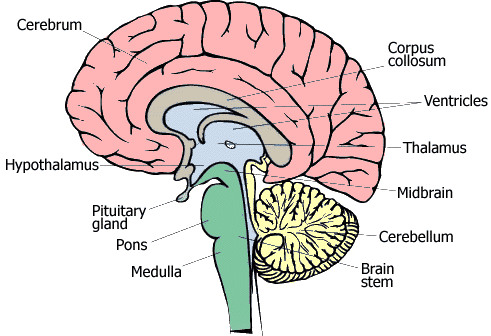
2. When a student is performing complex mathematical reasoning and logical deductions, which division of the brain is the primary center for these higher-order executive functions?
Quick-Fact & Solution
Correct: B
Explanation: The telencephalon (cerebral hemispheres) is responsible for conscious thought, intelligence, memory, and reasoning.
3. In angiosperms, the edible part of a true fruit typically develops from the ovary wall. Which of the following is the specific term for the fleshy middle layer of a drupe fruit like a mango?
Quick-Fact & Solution
Correct: B
Explanation: The pericarp is divided into the epicarp (skin), mesocarp (flesh), and endocarp (pit/stone). In mangoes, we eat the mesocarp.
4. Hemophilia is an X-linked recessive disorder. A couple has three children: a hemophilic son, a normal son, and a hemophilic daughter. What are the parental genotypes?
Quick-Fact & Solution
Correct: B
Explanation: For a daughter to be hemophilic ($X^h X^h$), she must inherit one $X^h$ from her father (making him $X^h Y$) and one from her mother (making her at least $X^H X^h$). The presence of a normal son ($X^H Y$) confirms the mother has a dominant $X^H$ to give.
5. Which of the following represents the correct anatomical sequence of deoxygenated blood returning from the systemic tissues to the site of oxygenation?
Quick-Fact & Solution
Correct: B
Explanation: Deoxygenated blood is carried by systemic veins to the vena cava, into the right side of the heart, and then pumped to the lungs via the pulmonary artery.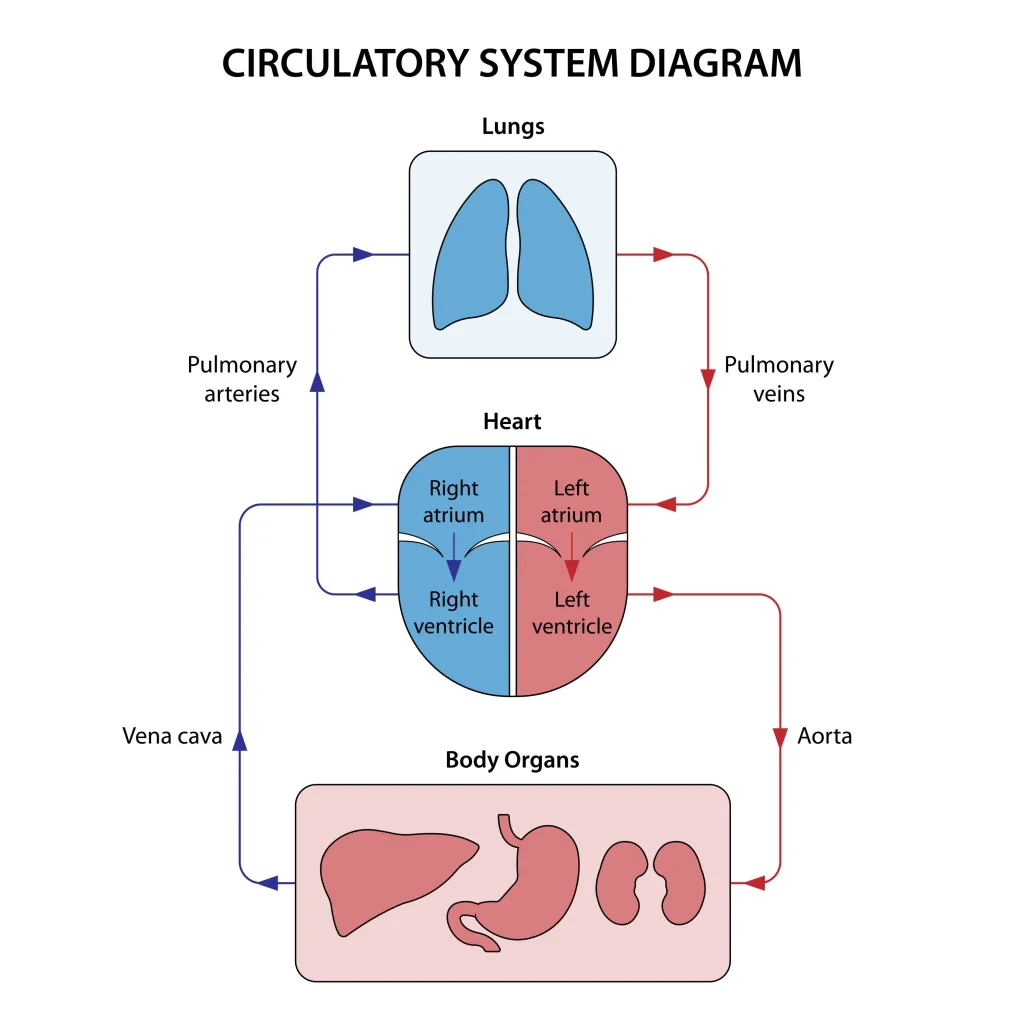
6. If a mature protein consists of a sequence of 200 amino acids, what is the minimum number of nucleotides required in the mRNA coding region (excluding the stop codon)?
Quick-Fact & Solution
Correct: C
Explanation: Genetic code is a triplet code ($1 text{ amino acid} = 3 text{ nucleotides}$). Thus, $200 times 3 = 600$ nucleotides.
7. Which statement accurately describes a fundamental difference between Meiosis-I and Mitosis?
Quick-Fact & Solution
Correct: A
Explanation: Synapsis (pairing of homologous chromosomes) and crossing over are unique features of Prophase-I of meiosis, ensuring genetic variation.
8. A localized physiological response characterized by the accumulation of Plasma and White Blood Cells (WBCs), resulting in heat, pain, and swelling, is known as:
Quick-Fact & Solution
Correct: B
Explanation: Inflammation is a non-specific second line of defense aimed at isolating and destroying pathogens.
9. Which of the following conditions is not caused by a mutation affecting a specific protein or amino acid sequence?
Quick-Fact & Solution
Correct: D
Explanation: Osteomalacia is a nutritional/environmental disorder, whereas the others are hereditary molecular diseases caused by genetic mutations.
10. The “sensitive plant” (Mimosa pudica) exhibits rapid leaf drooping upon physical contact. This non-directional movement in response to touch is termed:
Quick-Fact & Solution
Correct: B
Explanation: Nastic movements are non-directional responses. Haptonasty (or thigmonasty) specifically refers to responses to mechanical touch.
11. Parthenocarpy, or the formation of seedless fruits without fertilization, can be induced artificially. The application of which hormone is most commonly associated with this process?
Quick-Fact & Solution
Correct: C
Explanation: Auxins (and sometimes gibberellins) are used to induce the development of the ovary into a fruit without pollination or fertilization.
12. According to Darwin’s Theory of Natural Selection, which sequence represents the most logical flow of biological events?
1. Struggle for existence.
2. Variation within a species.
3. Better-adapted variants survive longer.
4. Overproduction of offspring.
5. Heritable variations lead to predominance in the population.
Quick-Fact & Solution
Correct: A
Explanation: Natural selection starts with overpopulation leading to competition (struggle), where pre-existing variations determine survival and subsequent inheritance.
13. During embryonic development, which germ layer is primarily responsible for the formation of the circulatory system, muscles, and most internal organs?
Quick-Fact & Solution
Correct: B
Explanation: Mesoderm gives rise to skeletal, muscular, and circulatory systems. Ectoderm forms nervous system/skin, and endoderm forms gut lining.
14. In the context of reproductive cloning, which of the following is not necessarily true about the clone relative to the donor?
Quick-Fact & Solution
Correct: D
Explanation: A clone is a genetic copy, but environmental factors (epigenetics, upbringing, habitat) ensure they are distinct individuals.
15. An apple is classified as a “false fruit” because the succulent part we consume originates from a structure other than the ovary. Identify this structure:
Quick-Fact & Solution
Correct: B
Explanation: In an apple, the ovary forms the “core,” while the edible part is the swollen thalamus/receptacle.
16. A mother has blood type AB ($I^A I^B$) and the father has blood type O ($ii$). What are the possible phenotypes for their biological offspring?
Quick-Fact & Solution
Correct: C
Explanation: The mother provides either an $I^A$ or $I^B$ allele. The father provides only $i$. The resulting genotypes are $I^A i$ (Type A) and $I^B i$ (Type B).
17. Most sensory messages traveling toward the cerebral cortex are first received and “sorted” by a specific relay station in the brain. Identify this structure:
Quick-Fact & Solution
Correct: B
Explanation: The thalamus acts as a major relay and processing center for information from all senses (except smell) destined for the higher centers of the brain.
18. Biological organisms are categorized based on their cellular complexity. This includes the distinction between:
Quick-Fact & Solution
Correct: A
Explanation: Cellular complexity refers to the structural organization (nucleus/organelles presence). Option B refers to number of cells, and Option C refers to nutrition.
19. The primary metabolic distinction between aerobic and anaerobic respiration in eukaryotes is the:
Quick-Fact & Solution
Correct: B
Explanation: Aerobic respiration yields significantly more ATP ($approx 36$-$38$) compared to the net gain of only 2 ATP in anaerobic respiration.
20. If a cell completes Telophase-I with chromosomes consisting of two sister chromatids, what will be the state of the chromosomes after the completion of Telophase-II?
Quick-Fact & Solution
Correct: B
Explanation: Meiosis-II is an equational division where sister chromatids separate. Thus, each final daughter cell has single-stranded chromosomes.
© Mahida Academy®
Found an error? Please report it in the comments below.