
AKU ASDH Mathematics Syllabus (Curriculum)
AKU ASDH Mathematics: Detailed Syllabus Outline
A Comprehensive Learning Framework for the 2026 Entrance Test
1. Foundational Arithmetic & Number Systems
This section ensures students have the computational speed required for the 180-minute exam window. It covers everything from basic number properties to complex pharmaceutical-style word problems.
- Number Classification: Rational vs. Irrational numbers; identifying terminating and recurring decimals.
- Prime Factorization: Using HCF and LCM to solve “real-world” synchronization problems (e.g., timing of medicine doses or overlapping cycles).
- Percentage Dynamics: Calculating percentage increase/decrease, successive discounts, and simple vs. compound interest logic.
- Ratios & Proportions: Direct and inverse proportions; dividing quantities into specific ratios (essential for medical dilutions).
- Complex Numbers: Basic operations ($+$, $-$, $times$, $div$) and calculating the modulus $|z| = sqrt{a^2 + b^2}$.
2. Advanced Algebraic Modeling
Algebra in the AKU context is about translating narrative clinical text into solvable mathematical models.
- Linear & Simultaneous Equations: Solving for multiple unknowns in resource-allocation scenarios.
- Inequalities: Determining shaded regions on a graph and finding maximum/minimum range boundaries for variables.
- Quadratic Reasoning: Factoring, using the quadratic formula, and understanding the vertex and intercepts of parabolic curves.
- Set Theory: Mastering Union ($cup$), Intersection ($cap$), and Complement ($A’$) using 2 and 3-circle Venn Diagrams.
- Functions: Understanding domain and range; evaluating composite functions like $f(g(x))$ and finding inverse functions $f^{-1}(x)$.
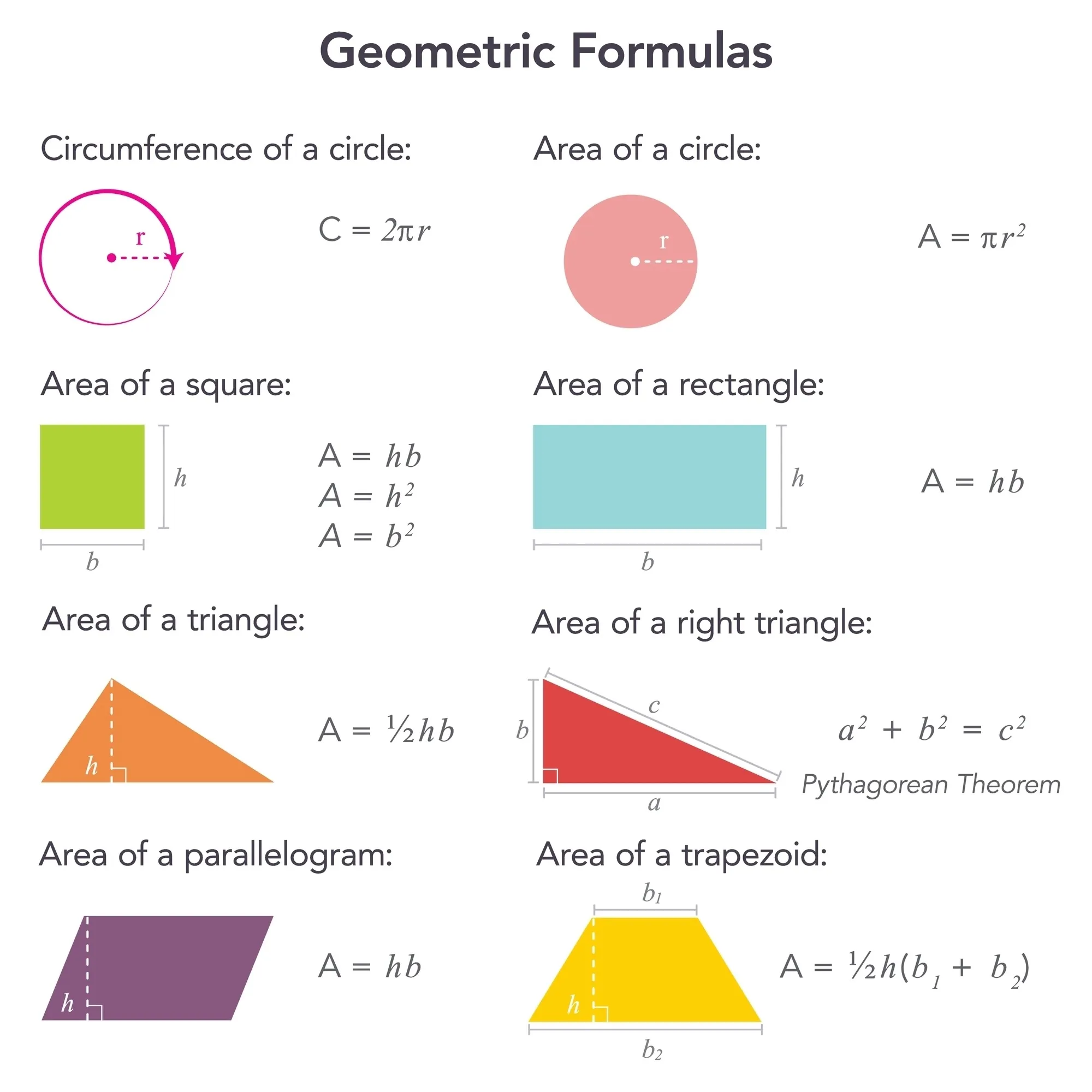
3. Geometry & Spatial Visualization
Focuses on both 2D planar geometry and 3D solid geometry, often integrated with physics-based reasoning.
- Triangles & Polygons: Pythagorean theorem application, properties of similar vs. congruent triangles, and angle properties in parallel lines.
- Circle Geometry: Calculating arc length ($s = rtheta$) and sector area; understanding tangent and chord properties.
- Coordinate Geometry: Finding the distance between two points, midpoint formulas, and the equation of a line ($y = mx + c$).
- 3D Mensuration: Surface area and volume of cylinders, cones, spheres, and rectangular prisms (vital for calculating biological capacities).
4. Data Interpretation, Statistics & Logic
Prepares students for evidence-based practice and interpreting medical research data.
- Descriptive Statistics: Calculating Mean, Median, and Mode from grouped and ungrouped data; understanding data spread via Range and Standard Deviation.
- Graphical Analysis: Interpreting and extracting data from Pie Charts, Histograms, Stem-and-Leaf plots, and Scatterplots (correlation).
- Probability: Independent and dependent events; using tree diagrams to calculate the likelihood of specific health outcomes.
- Intelligence & IQ Logic: Number series recognition, calendar/clock logic, and metric unit conversions (e.g., mg to grams, liters to ml).
- AKU Specialized Formats: High-speed training for Quantitative Comparisons (Column A vs. B) and Data Sufficiency assessments.
Strategic Recommendation
This AKU ASDH Mathematics Syllabus requires a shift in mindset from traditional calculation to “Mathematical Reasoning.” At Mahida Academy, we recommend spending 40% of your prep time on Word Problems and Data Interpretation, as these sections carry the highest weight in the Subject Reasoning paper.