
15.1 Homeostasis-Introduction (Copy)
☀️ Lesson 1: Introduction to Homeostasis
Chapter 15: Homeostasis
Student Learning Outcomes (SLOs 15.1.1 – 15.1.2)
Learning Objectives
- Define homeostasis and identify the components of the internal environment.
- Explain the three primary mechanisms of homeostasis: osmoregulation, thermoregulation, and excretion.
- Describe the physiological and evolutionary significance of maintaining a stable internal environment.
📺 Video Lesson: Introduction to Homeostasis
An overview of how biological systems maintain internal balance despite external environmental changes.
1. Defining Homeostasis (SLO 15.1.1)
The term homeostasis is derived from the Greek words homeo (similar) and stasis (standing still). In biology, it is defined as the protection of the internal environment from the harms of fluctuations in the external environment.
Organisms exist in a constantly shifting external environment where temperature, water availability, and nutrients fluctuate wildly. However, the cells inside the organism are bathed in an internal environment (composed of blood plasma and tissue/interstitial fluid). To keep cells alive and functioning, this internal environment must be kept remarkably stable.
A. The Three Pillars of Homeostasis
To maintain this internal balance, the body relies on three highly specific regulatory processes:
1. Osmoregulation: The mechanism of regulating water and solute (salt) concentration in the body fluids. It ensures that cells do not gain too much water and burst, or lose too much water and shrink.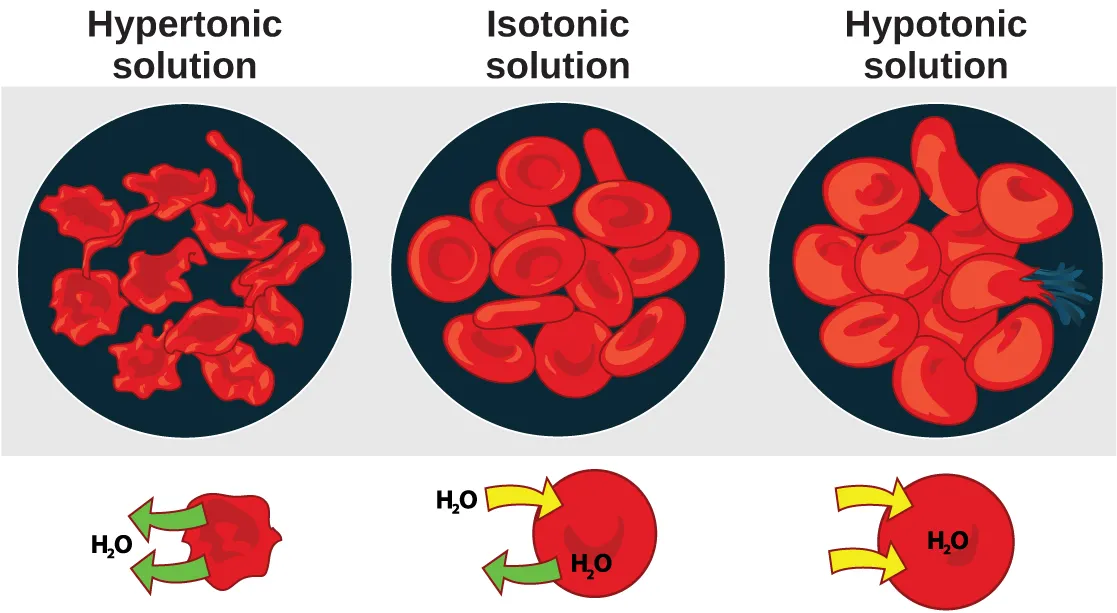
2. Thermoregulation: The maintenance of internal body temperature within a tolerable range. For humans, this core temperature is tightly regulated around $37^circtext{C}$.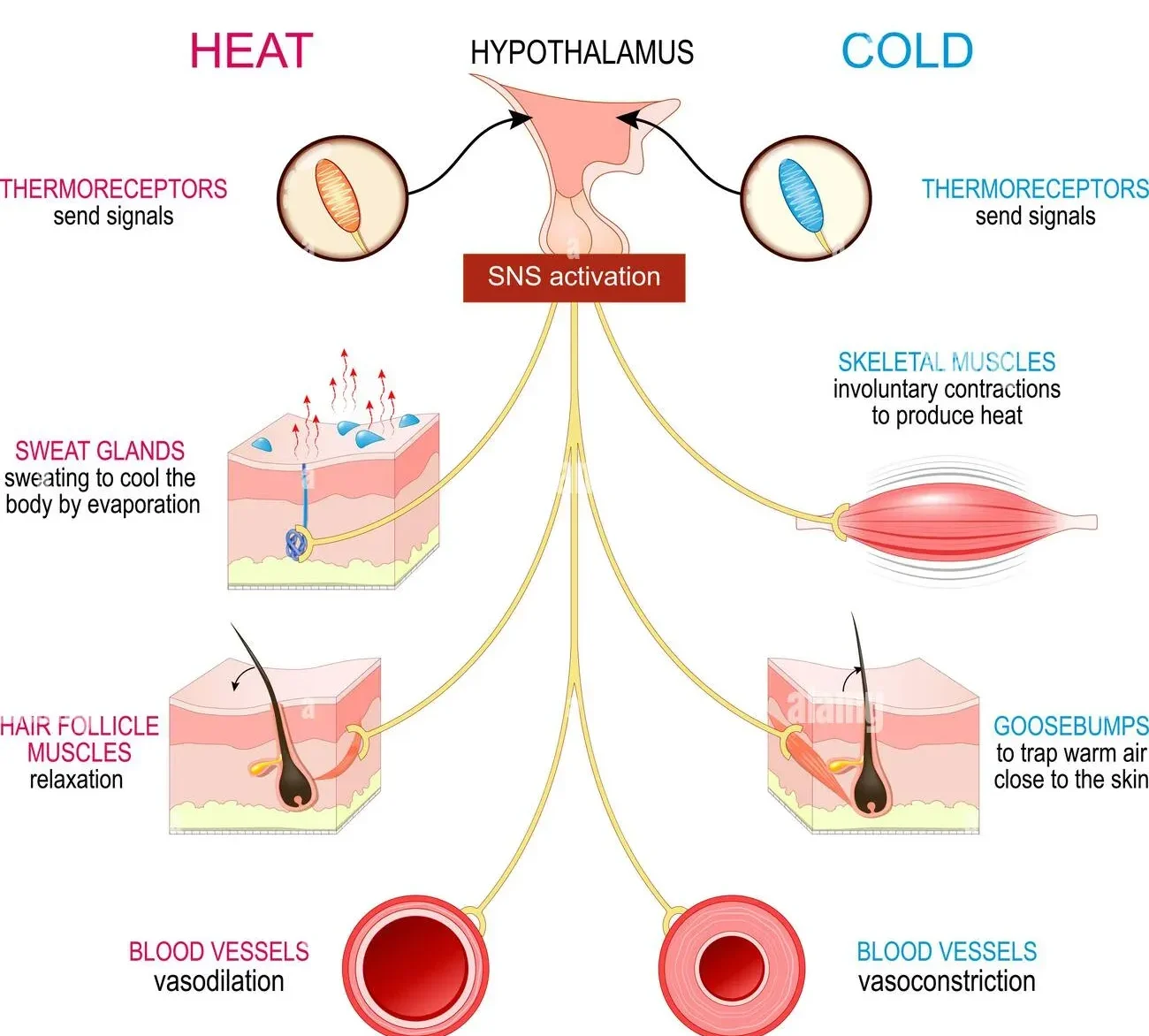
3. Excretion: The mechanism of eliminating toxic nitrogenous metabolic wastes (like ammonia, urea, and uric acid). If left unchecked, these metabolic byproducts would poison the internal environment.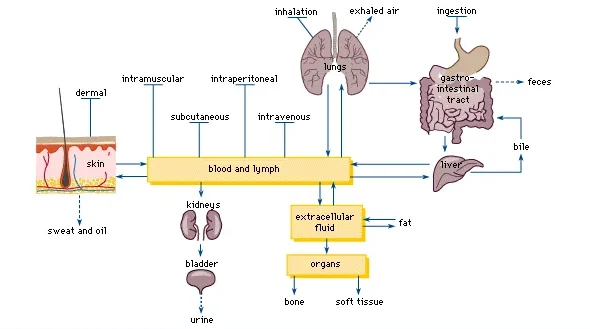
2. Significance of Homeostasis (SLO 15.1.2)
The development of homeostatic control systems was a massive evolutionary leap. The significance of homeostasis can be observed at both the microscopic cellular level and the macroscopic organismal level:
Optimal Enzyme Function: All metabolic pathways in living organisms are catalyzed by enzymes. Enzymes are highly sensitive proteins that require highly specific temperatures and pH levels to maintain their active sites. If the internal temperature drops, metabolism halts; if it rises too high, enzymes denature. Homeostasis provides the exact conditions needed for continuous, efficient metabolism.
Cellular Structural Integrity: Without osmoregulation, cells are highly susceptible to osmotic stress. In a hypotonic environment, cells swell and burst (lysis). In a hypertonic environment, they shrivel (crenation). A stable internal water potential guarantees cellular integrity.
Evolutionary Independence: By maintaining a constant internal environment, complex organisms (like mammals and birds) are no longer completely at the mercy of their external surroundings. This independence allowed animals to adapt to and colonize diverse, harsh habitats, from freezing tundras to scorching deserts.
🎯 AKU Exam Insights
- Dynamic Equilibrium: Medical entrance exams frequently test the misconception that homeostasis is a “fixed” state. Always remember it is a state of dynamic equilibrium—values naturally fluctuate up and down within a narrow, highly controlled range, rather than remaining absolutely rigid.
- Linking Systems: Be prepared for MCQs that connect physiological systems to homeostatic functions. For example, recognize that the kidneys primarily handle osmoregulation and excretion, while the skin and hypothalamus primarily handle thermoregulation.
QUICK-FACT: The concept of the “internal environment” (milieu intérieur) was first championed by French physiologist Claude Bernard in the 1850s, laying the foundational groundwork for modern physiology long before the term “homeostasis” was even coined!
📝 Concept Check
1. Which of the following is the primary evolutionary advantage of thermoregulation?
It allows the organism to survive indefinitely without water.
It ensures metabolic enzymes operate at their optimal temperature without denaturing.
It safely eliminates toxic nitrogen-based waste from the bloodstream.
It exactly matches the body’s internal temperature to the external environment.
Check Answer
Correct: It ensures metabolic enzymes operate at their optimal temperature without denaturing.
Explanation: Thermoregulation keeps internal temperatures stable. Because all life-sustaining chemical reactions are governed by temperature-sensitive enzymes, maintaining optimal heat is required to keep metabolism running efficiently.
2. A cell placed in a highly concentrated salt solution will lose water and shrivel. Which homeostatic mechanism actively prevents this from happening to human cells?
Excretion
Thermoregulation
Osmoregulation
Respiration
Check Answer
Correct: Osmoregulation
Explanation: Osmoregulation is the specific process of balancing water and solute (salt) concentrations in the body fluids to maintain stable osmotic pressure, thereby protecting cells from swelling or shrinking.
🏆 Up Next
Next: Lesson 15.2 – Feedback Systems
📝